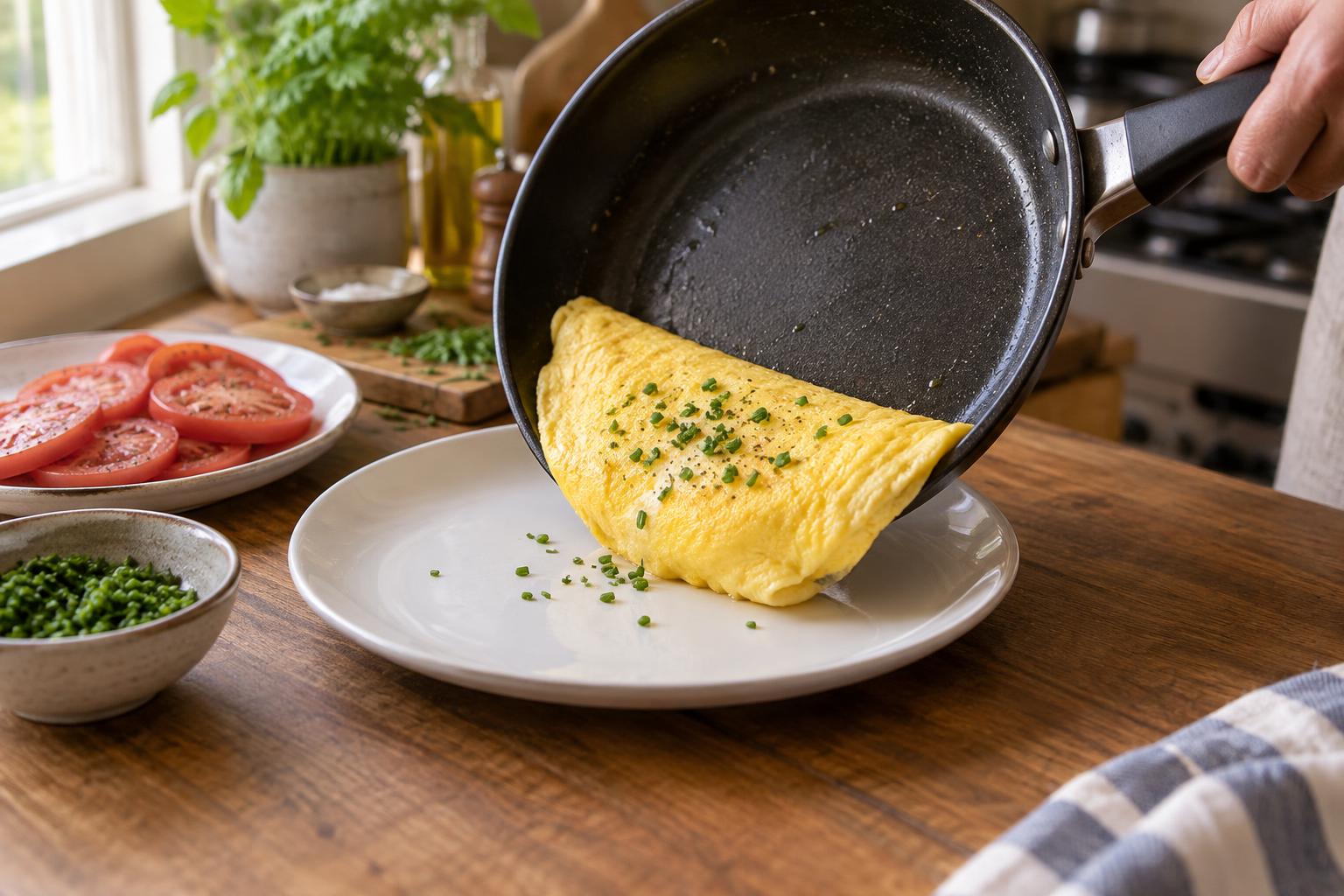
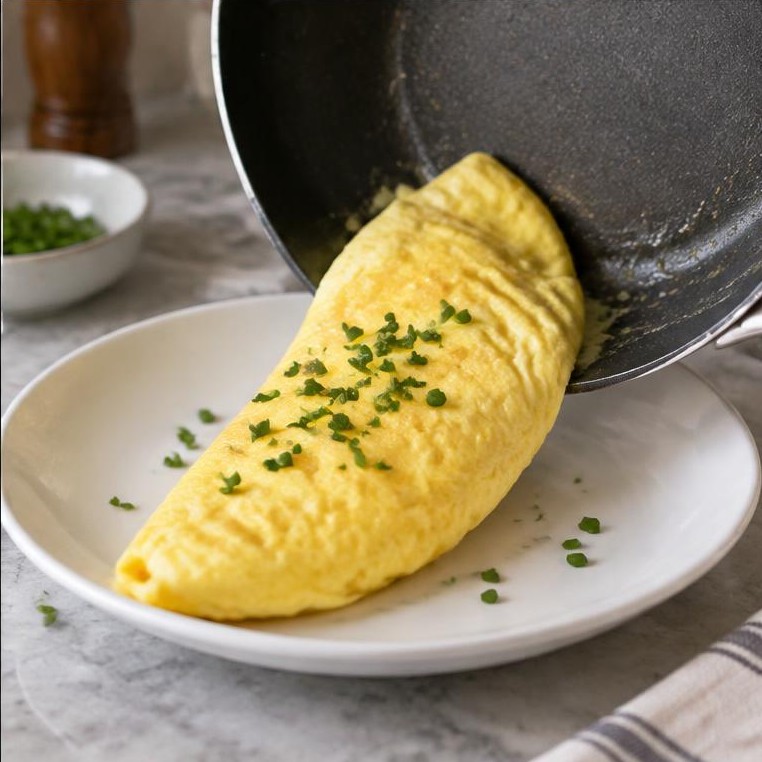
A golden omelet sliding from an 8-inch nonstick pan onto a warm plate

Two eggs, two minutes, one pan

Making the Perfect Omelet

Cook the fillings first, pour the eggs into foaming butter, and take the pan off the heat while the top still looks slightly wet. That single order of work is what separates a soft omelet from a rubbery one.

Part 01

A pan worth trusting

An omelet is fast, so there is no time to fix anything once the eggs are in. The pan and the tools have to be chosen before you crack the first egg — and a worn, scratched nonstick surface cannot be rescued by more butter.

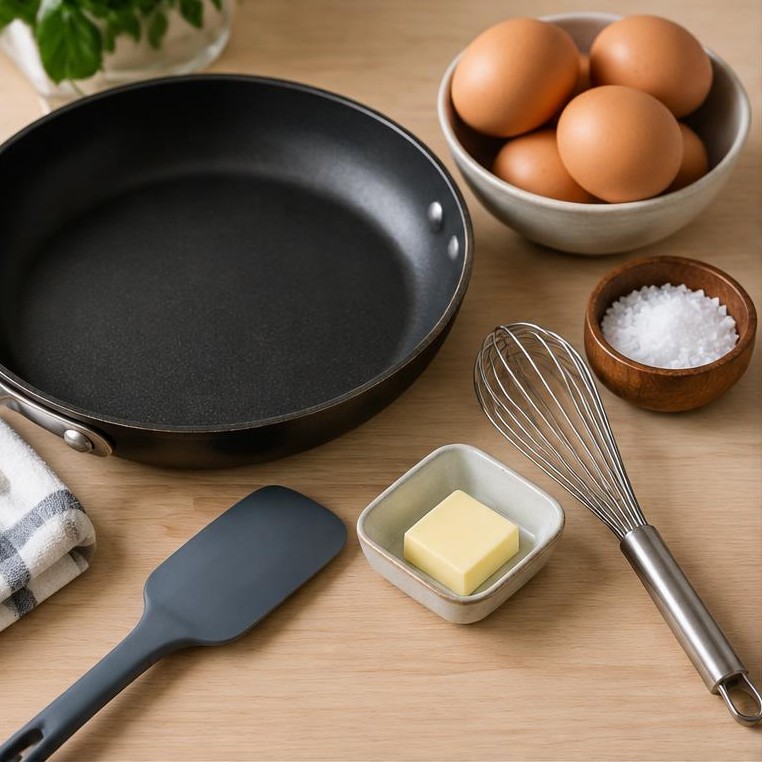
An 8-inch nonstick pan

An 8-inch nonstick pan

The one tool worth getting right

A clean, unscratched 8-inch (20 cm) nonstick pan with flared sides is what lets an omelet slide and fold instead of tearing. Too large and the egg spreads thin and dries out; too small and it steams instead of setting. Use silicone, wood or plastic utensils — metal tools ruin the coating, and a scratched pan sticks.

A whisk, a bowl, a spatula and a warm plate

A whisk, a bowl, a spatula and a warm plate

Everything within reach before the heat goes on

A wire whisk breaks the yolks and whites far faster than a fork. Keep a heatproof spatula, the fillings in one bowl, the grated cheese in another, and a warm plate beside the stove. A finished omelet waits for nothing — if the plate is cold, it cools in seconds.

Butter, oil or nothing?

A measured teaspoon of butter in an 8-inch pan is enough to stop the egg sticking and to carry flavor; a same-sized measure of olive or canola oil works the same way. A nonstick pan needs no pool of fat. Skip bacon fat, and add cheese by the tablespoon — the salt in it counts toward your daily sodium.

Part 02

What cooks first, and when the eggs go in

Eggs set in under two minutes. Anything that still needs browning, softening or drying out has to reach the pan before them, and come back afterwards. Follow these eight steps in order and the rest is practice.

  1. 1

    Set everything out first

    Set everything out first

    Whisk the eggs, cut the fillings, grate the cheese, warm the plate, put the spatula beside the burner. A two-egg omelet takes about two minutes once the pan is hot, and nothing can be chopped or fetched while the egg is cooking.

  2. 2

    Cook what needs heat — before the eggs

    Cook what needs heat — before the eggs

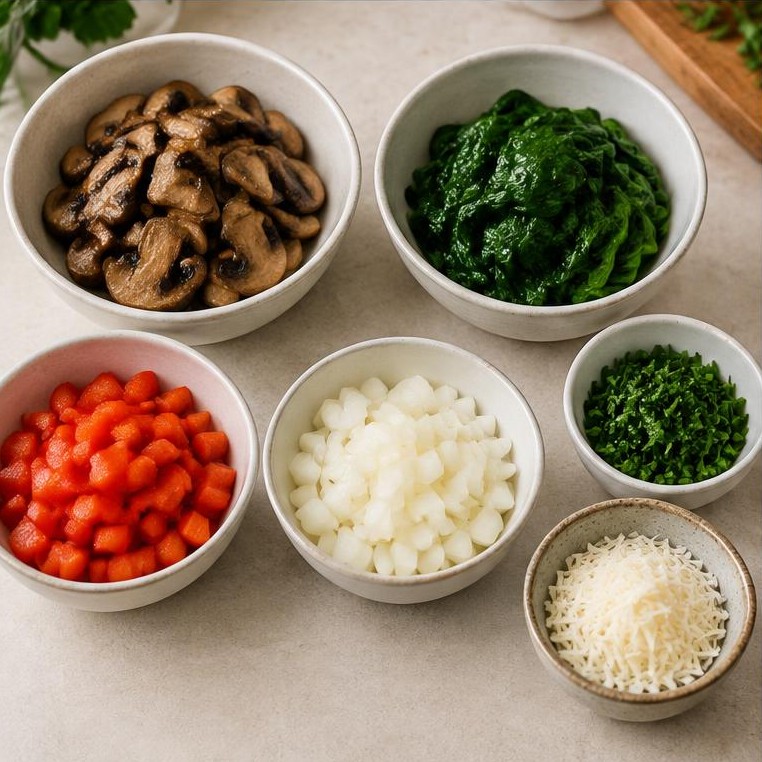
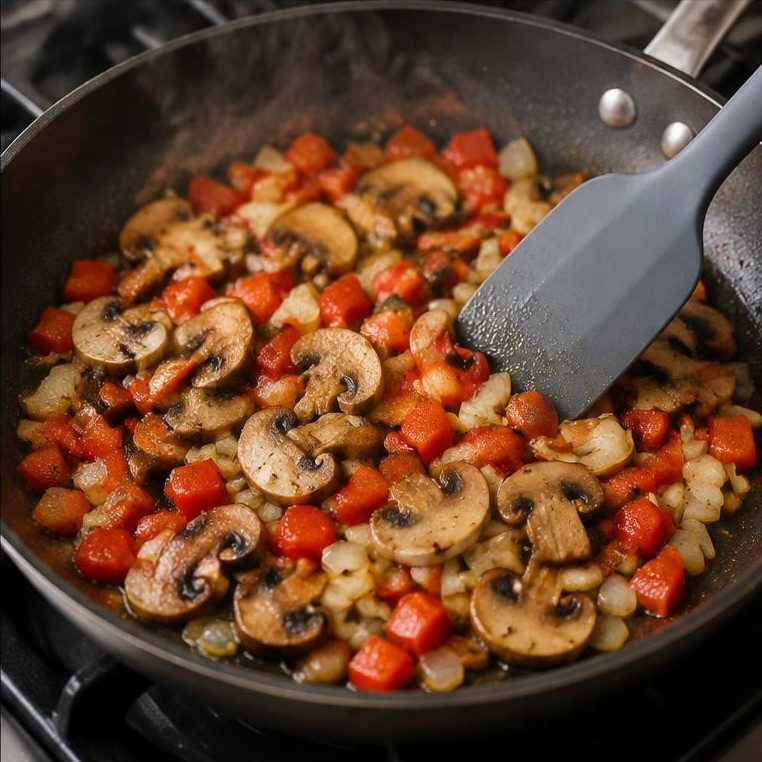
    Mushrooms, onion, peppers, tomatoes, spinach, potatoes, raw chicken or shrimp all go into the hot pan first with a little oil, until soft and lightly browned. Cook off the moisture; watery fillings make an omelet weep. Season at the end of this stage.

  3. 3

    Lift the fillings out

    Tip the cooked fillings into a bowl and wipe the pan if anything has browned onto it. This is the step most people skip, and it is the reason their eggs brown unevenly and stick. For a half-fold omelet you can push the fillings to one side instead of removing them.

  4. 4

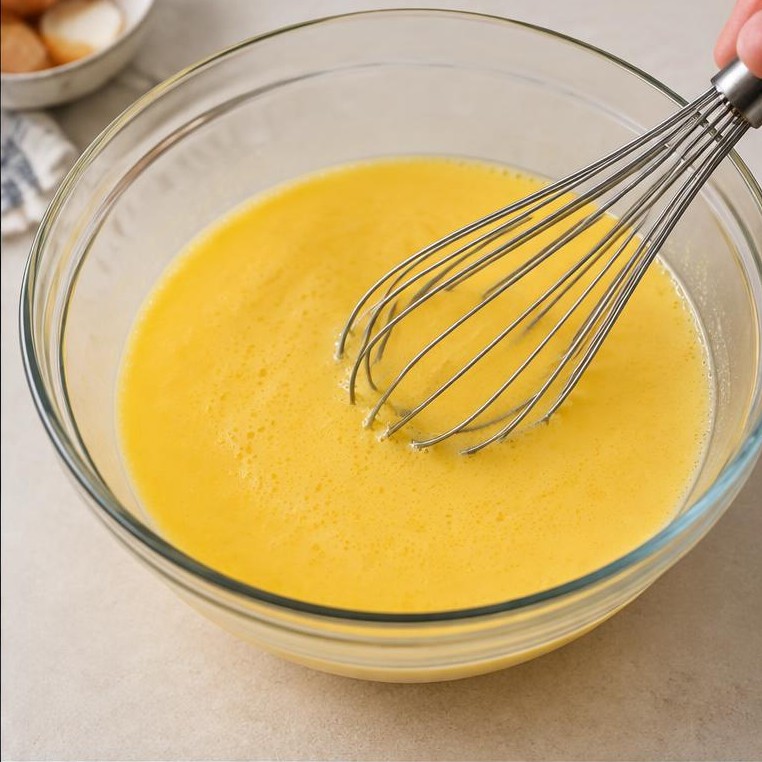
    Whisk the eggs until no streaks show

    Two large eggs per person, whisked 15–20 seconds until completely uniform with no threads of white. Whisk in a pinch of salt now — salting early does not make the egg tough. Water makes a lighter, thinner omelet; milk makes it softer but browns faster. Let the whisked eggs sit a minute so the bubbles rise, then skim them for a smoother surface.

  5. 5

    Butter in, foaming but not brown

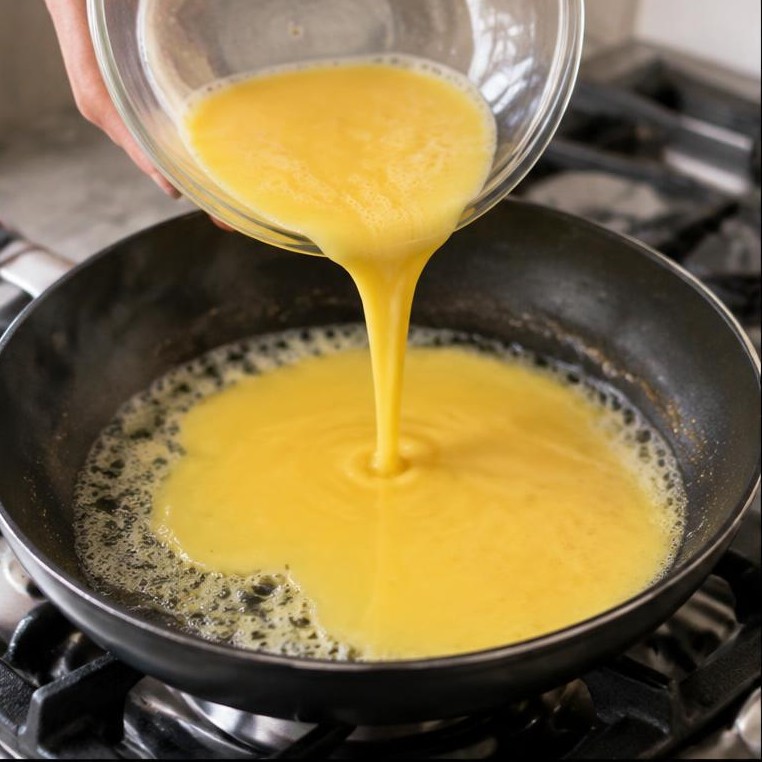
    Set the pan over moderate heat and melt about a teaspoon of butter, swirling to coat the base and the sides, until it foams quietly. If it browns, the omelet will taste burnt — lift the pan off the burner, wipe it and start again.

  6. 6

    Pour, then let the edges begin to set

    Pour, then let the edges begin to set

    Pour the eggs into the center; they should sizzle gently, not spit. Tilt the pan so the egg runs into a thin even layer across the whole base. Leave it untouched for 10–20 seconds until the edges start to firm and the center is still loose.

  7. 7

    Push, stir and tilt for 30–60 seconds

    Push, stir and tilt for 30–60 seconds

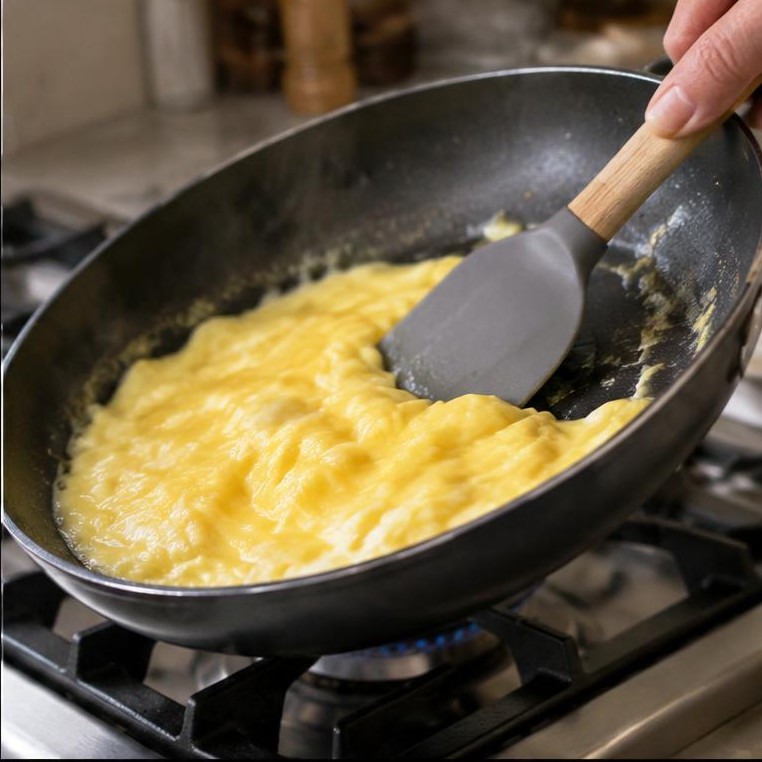
    Draw the set edges toward the center with the spatula and tilt the pan so raw egg flows into the gap. For a creamy interior, stir briskly while shaking the pan back and forth to build small soft curds. Stop while the base is set but the top still looks wet and glossy — the pan's stored heat finishes the omelet after the heat is off.

  8. 8

    Fill, fold and tip onto the plate

    Fill, fold and tip onto the plate

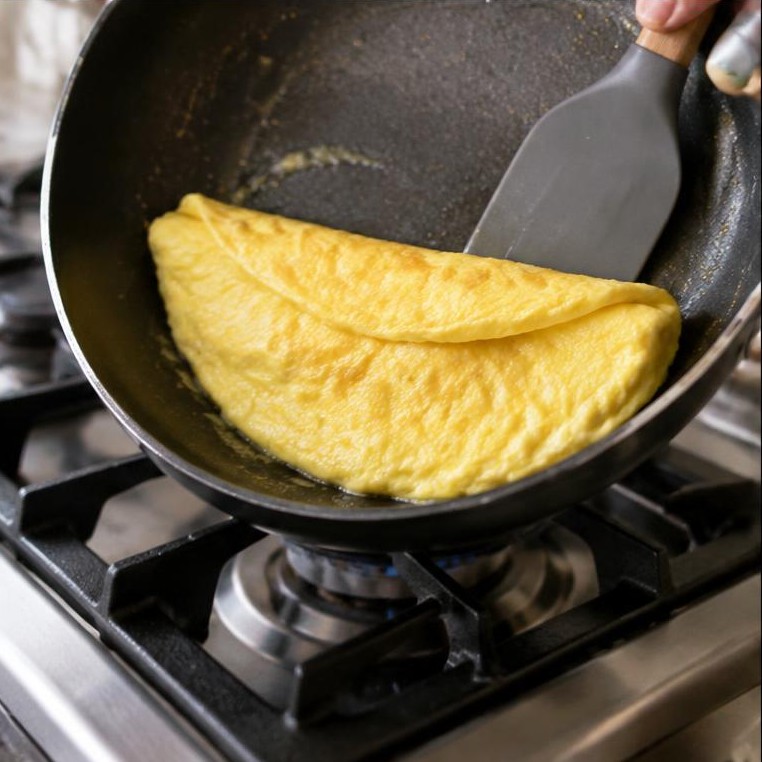
    Turn the heat off. Scatter the fillings and cheese in a band across the third nearest you, let them sit 20–30 seconds, then roll the far edge over them and tip the omelet onto a warm plate seam-side down. Wipe the top with a little butter, add herbs or pepper, and serve within a minute.

Part 03

Every filling has its own moment

If it needs cooking, it goes in before the eggs. If it is delicate, it waits until after.
FillingWhen to addWhy
Mushrooms, onion, peppers, leeks

Thin, even dice or slices; dry before they go in

First, in the pan, before the eggsCook 3–6 minutes until soft and the pan is dry, then remove with the pan wiped.
Spinach, chard, kale, tomatoes

Chop; squeeze cooked spinach dry

First, wilted, then returned at the foldWilt in the hot pan for a minute and press out the water or the omelet turns watery.
Potatoes (Spanish tortilla)

Slice thin; par-boil or cook slowly in oil

First, cooked tender, then stirred into the eggRaw potato never softens inside an omelet. Cook it until a knife slides through.
Chicken, shrimp, beans, leftover grains

Already safely cooked; cut small; pat dry

Warmed through with the fillings, then lifted outPoultry and leftovers reheat to 165°F / 74°C; shellfish to 145°F / 63°C.
Grated cheese

Fine grate; one tablespoon is plenty

Last 30 seconds, on the egg before foldingAdded early it sinks and browns; added late it melts into the egg.
Fresh herbs, scallions, pepper

Chopped; a little set aside for the top

Whisked in, or scattered after cookingDelicate herbs lose flavor under heat — stir half through the egg, finish with the rest.
Avocado, cucumber, fresh salsa, smoked salmon

Sliced or spooned ready

After cooking, inside the fold or on topThese go limp or weep if cooked, so they only ever meet a finished omelet.
Bacon, ham, sausage, chorizo

Crisp and drain first; skip where you can

Crisped before the eggs, added at the foldHighest sodium and saturated fat in the pan — herbs, citrus and pepper flavor eggs for free.

Part 04

Four methods, one pan

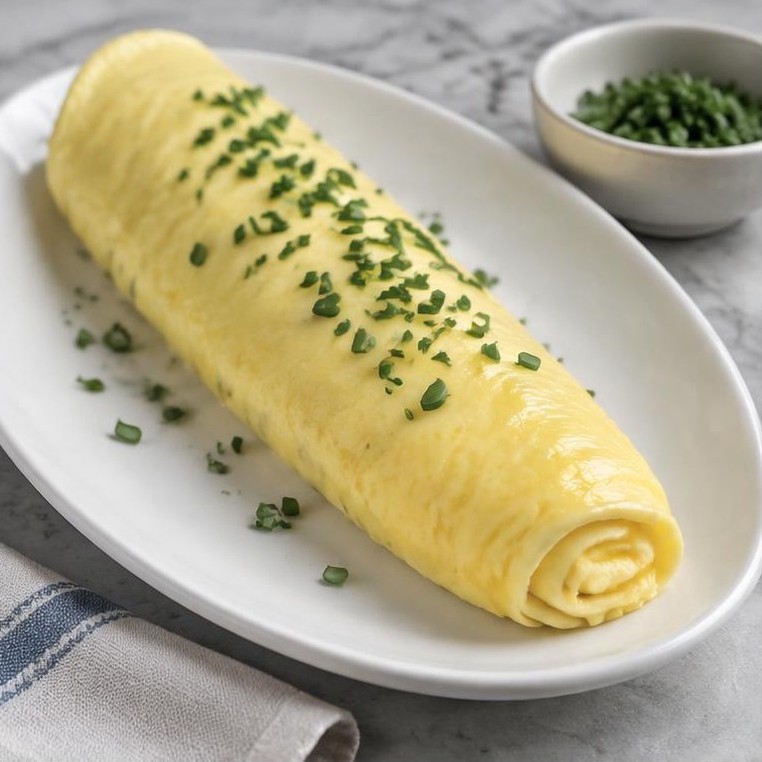
Classic French
1

Classic French

Moderate • pan shaken, egg stirred the whole time

Works well with: Plain, with herbs, or with a little grated cheese

  1. Whisk 3 eggs until smooth and season. Melt 1 tbsp butter in an 8-inch nonstick pan over moderate heat until it foams without browning.
  2. Pour the eggs in and stir briskly with the spatula, tines or edge down, while shaking the pan back and forth. Scrape the base constantly so tiny creamy curds form.
  3. Stop stirring when the egg is a soft, glossy custard still loose enough to flow — 1 to 2 minutes. Spread it level, add cheese or herbs, and let it settle for 10 seconds.
  4. Tilt the pan away from you, roll the near edge over the filling into a cigar shape, then tip it seam-side down onto a warm plate.

Pale and smooth with no brown spots, and the center still slightly glossy. That soft middle is a preference for healthy adults — for anyone pregnant, very young, elderly or immunocompromised, use pasteurized eggs and cook it firm.

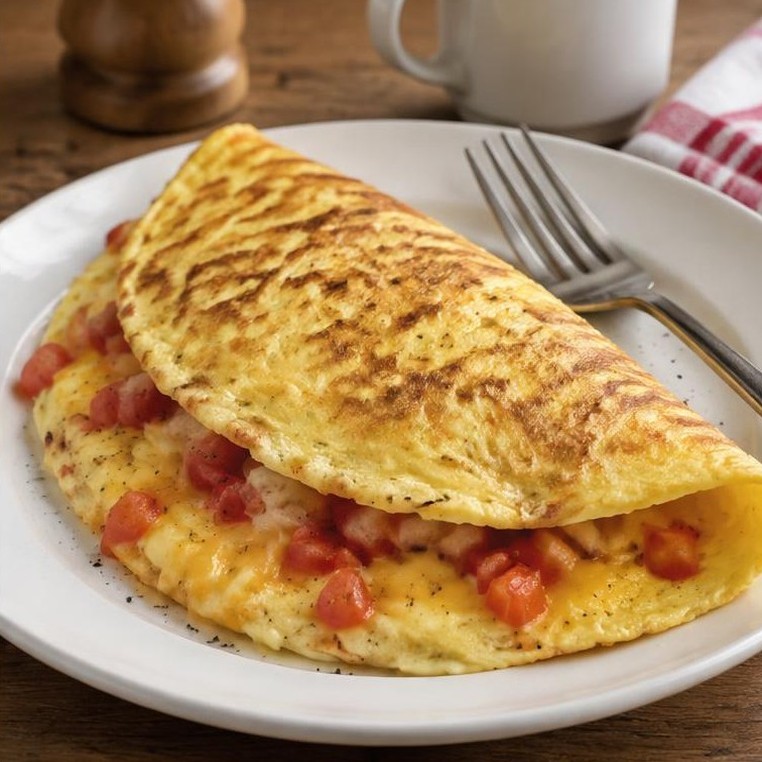
Diner-style folded
2

Diner-style folded

Medium to medium-high • butter allowed to foam and just color

Works well with: Cheese, diced peppers and onion, cooked meat, salsa

  1. Cook the fillings first in a little oil until soft and dry; tip them onto a plate. Wipe the pan.
  2. Whisk 2–3 eggs until uniform. Melt butter over medium heat until it foams, pour the eggs in and tilt the pan to cover the base.
  3. Let the base set for 20–30 seconds, then lift an edge and tip uncooked egg underneath. Repeat until the top is barely wet.
  4. Pile fillings and cheese on one half, fold the empty half over, press lightly for 20 seconds, and slide onto a plate.

Lightly golden outside, fully set in the middle, with the filling hot. This is the fully cooked choice: cook until the egg is set throughout and reaches 160°F / 71°C, without going rubbery.

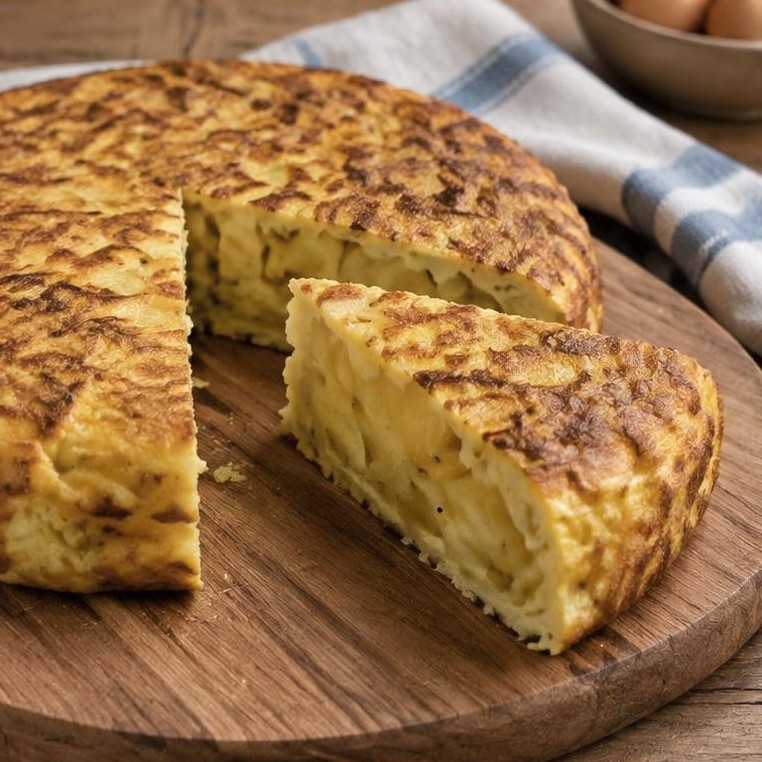
Spanish tortilla
3

Spanish tortilla

Medium-low • one flip, lid helpful

Works well with: Potato and onion, or potato and spinach

  1. Cook sliced potato (and onion) slowly in olive oil over low heat until tender but not browned, 15–20 minutes; drain, keeping the oil.
  2. Stir the hot potato into well-whisked eggs with salt and let it stand 5–10 minutes so the potato absorbs some egg.
  3. Warm a little oil in an 8-inch pan, pour in the mixture and cook 4–5 minutes until the edges set and the top is still loose.
  4. Cover with a plate, invert confidently, then slide the tortilla back in, cooked-side up, and cook 3–4 minutes more.

A knife through the center comes out almost clean and the middle is just set, not runny. It slices better at room temperature, and it keeps two days covered in the fridge.

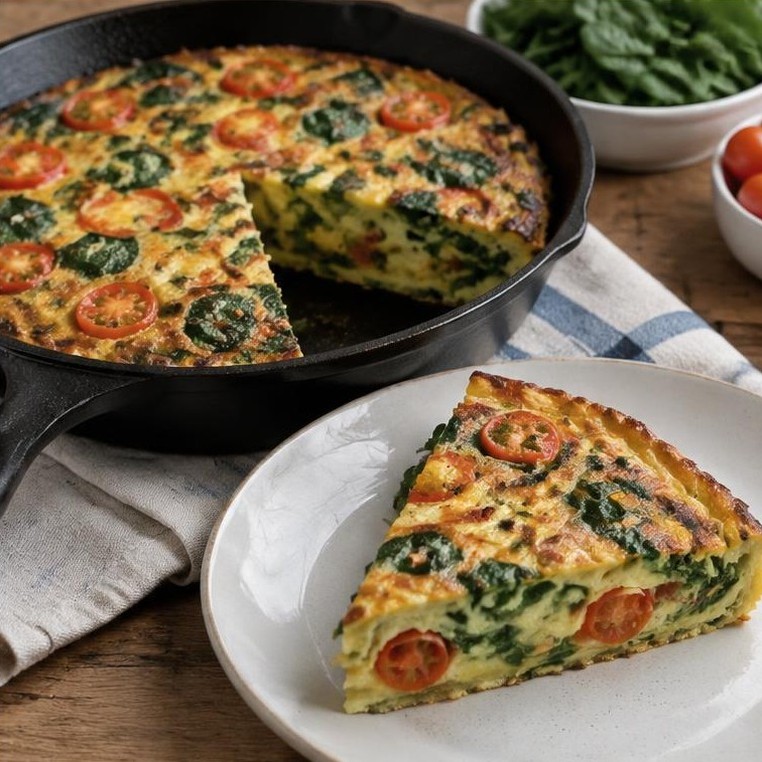
Frittata (oven-finished)
4

Frittata (oven-finished)

Stove until the edges set, then a hot broiler

Works well with: Almost any vegetable, herbs, cheese, leftover grains

  1. Preheat the broiler. Cook vegetables in an oven-safe pan with oil until soft and dry; level them.
  2. Pour well-whisked seasoned eggs over, stir twice, then stop and let the edges set for 1–2 minutes on the stove.
  3. Transfer under the broiler 2–4 minutes until the top is set and lightly spotted — keep the door open a crack if your stove manual says to.
  4. Cool 2 minutes, run a knife around the edge, tip onto a board and cut into wedges.

Firm right through the center with no shake when you nudge the pan — 160°F / 71°C. The easiest way to cook eggs all the way through for a family.

Part 05

Doneness, heat and egg safety

Three ways to finish it

Soft-set (classic French)
Top still glossy as it plates
For healthy adults only. Use pasteurized shell eggs if anyone eating is pregnant, elderly, a young child or has a weakened immune system — and cook firm if in doubt.
Creamy but set
Small soft curds, no liquid egg
The middle ground most people want: the omelet comes off the heat looking slightly under-done and finishes on the way to the plate.
Fully set (diner, tortilla, frittata)
160°F / 71°C in the center
USDA guidance for egg dishes. Firm throughout, still moist if the heat was moderate and the omelet was not left on the burner.

A burner dial is not a thermometer. If the butter browns the moment it hits the pan, the stove is too hot for eggs — move to a lower setting and give the pan a minute to settle.

Keeping eggs safe

  • Refrigerate shell eggs at or below 40°F / 4°C and use them within 3–5 weeks of purchase. Discard any with a cracked or dirty shell.
  • Never leave eggs or cooked egg dishes out for more than 2 hours — or 1 hour if the room is above 90°F / 32°C.
  • Do not wash eggs before storing them; wash hands, the bowl and the spatula after they touch raw egg, and keep raw egg away from ready-to-eat food.
  • Cook egg dishes to 160°F / 71°C, or until the yolk and white are firm, when serving anyone at higher risk. Pasteurized eggs make a soft omelet safer.
  • Cool leftovers in a shallow container in the fridge within 2 hours and eat within 3–4 days, reheating to 165°F / 74°C.

Part 06

Your first perfect omelet, then fix what goes wrong

Start with a two-egg cheese omelet

  1. Set out a warm plate, a spatula, a tablespoon of grated cheese and the herbs.
  2. Whisk 2 eggs with a pinch of salt until no streaks of white show, about 15 seconds.
  3. Melt 1 tsp butter in an 8-inch nonstick pan over medium-low heat until it foams without browning.
  4. Pour the eggs in, tilt to cover the base, and leave them for 15 seconds.
  5. Push the set edges into the center, tipping raw egg into the gap, for 30–45 seconds until the top is glossy but no longer liquid.
  6. Cheese across the third nearest you, 20 seconds, then fold and tip onto the plate seam-side down.
Cook the mushroom & spinach omelet More egg breakfasts

What went wrong

It sticks and tears when I fold

The pan was cold when the butter went in, or the nonstick coating is worn. Use a good 8-inch pan, let the butter foam, and don't touch the egg until the edges have set.

Rubbery and dry

Too hot, or left on too long. Take the omelet off while the top still looks slightly wet; standing heat finishes it. A teaspoon of water in the egg also keeps it tender.

Watery, with liquid on the plate

The fillings released water. Cook mushrooms, spinach and tomatoes dry before the eggs, drain them, and add cheese only at the end.

Brown outside, raw inside

Heat too high. Drop to medium-low, lift the pan off the burner between stirs, and let the base set slowly before folding.

No golden color on a diner omelet

The butter was not foaming when the eggs went in, or the pan was too full. Use two eggs in an 8-inch pan and let the base sit undisturbed for 30 seconds.

Tastes flat

Season the eggs themselves, not just the top. Finish with herbs, black pepper, citrus zest, a splash of hot sauce or salsa instead of reaching for the salt.

A finished omelet sliding from the pan onto a warm plate

Serve it within a minute. An omelet waits for nobody, and a cold plate steals the heat out of it.

Cooking & food safety references

Try this recipe

Choose a complete, quantified recipe for practice. Each selection has its own ingredients and nutrition. The flexible two-egg cheese exercise above is technique guidance, not one of these recipes; its cheese, herbs and salt are not fully specified.

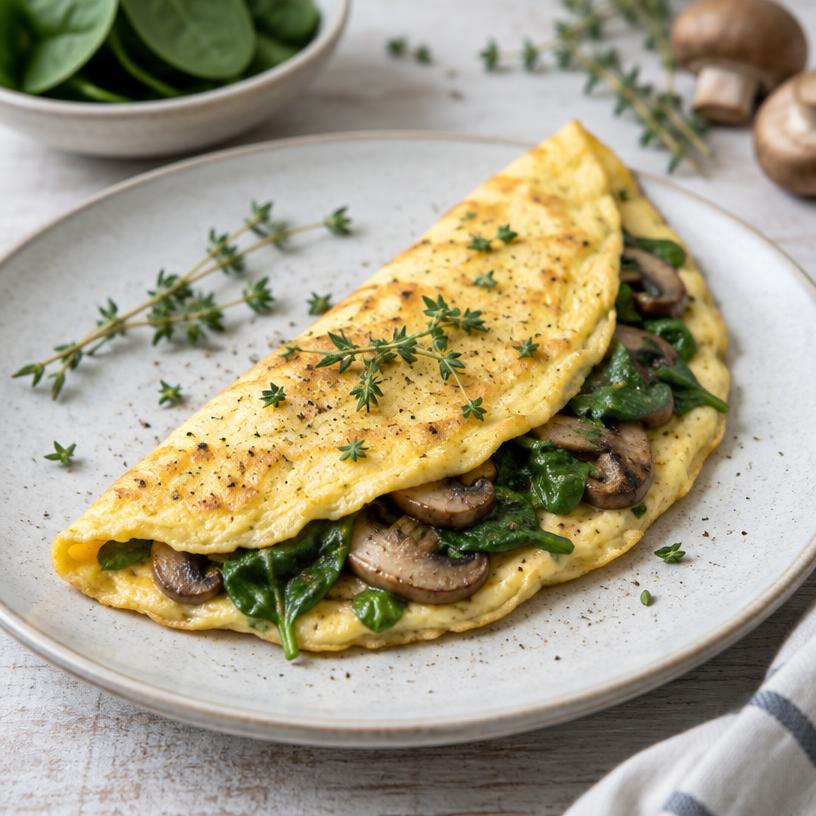
Mushroom & spinach omelet

Mushroom & spinach omelet

A fluffy egg-and-white omelet filled with mushrooms, spinach and herbs.

12 min · Yield: 1 standard serving · Servings: 1

Serving size: 1/1 of the listed recipe

Nutrition per standard serving

Checking recorded nutrition updates…

Estimated, not professionally reviewed. Changes to ingredients or portions change nutrition.

View Recipe