
Build a heart-friendly plate
Choose vegetables, whole fruit, beans, whole grains and unsalted nuts. Use olive oil in place of butter, and enjoy fish regularly when suitable for you.
Everyday choices for your heart and your health.
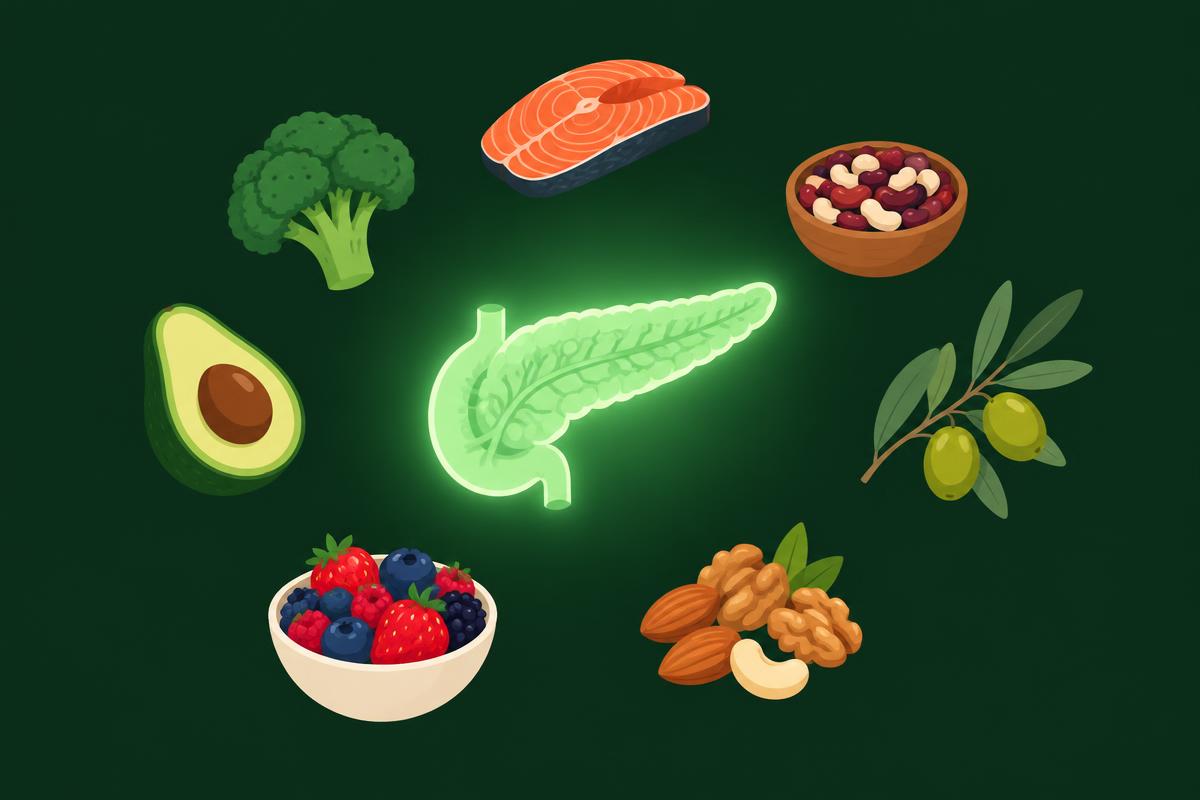
What the science says about type 2 diabetes, nutrition, weight loss, and pancreatic function.
A nutrition label describes a specific amount of food. Your portion may be smaller or larger, so start with the amount before comparing the numbers.
Fats contribute flavor and energy. Their type, amount and what they replace all matter in an overall eating pattern.
Salt added at the table is only one source of sodium. Foods that do not taste especially salty can still contribute a substantial amount.
A satisfying meal can combine vegetables, a protein source, a suitable carbohydrate food and portions that fit you. There is no single arrangement that fits everyone.
The planner separates what you prepare from your personal portion. It compares your planned food with targets, not with a record of everything you actually ate.
Food education can help you prepare questions and explore choices. It cannot replace an individualized plan from a clinician or registered dietitian.
Choose vegetables, whole fruit, beans, whole grains and unsalted nuts. Use olive oil in place of butter, and enjoy fish regularly when suitable for you.
Compare sodium and saturated fat per serving, then check how many servings you eat. For diabetes, total carbohydrate matters—not only the sugar line.
Build up gradually with walks or activities you enjoy. Ask your care team what is appropriate if you have symptoms, heart disease or medicines that affect glucose.
View estimated energy needs and enter your own nutrition targets, including care-team guidance, on youraccount page