Choose the right pan, control the heat and build flavorful meals with vegetables, lean proteins and a little oil.
Part 01
A wok that works with your stove
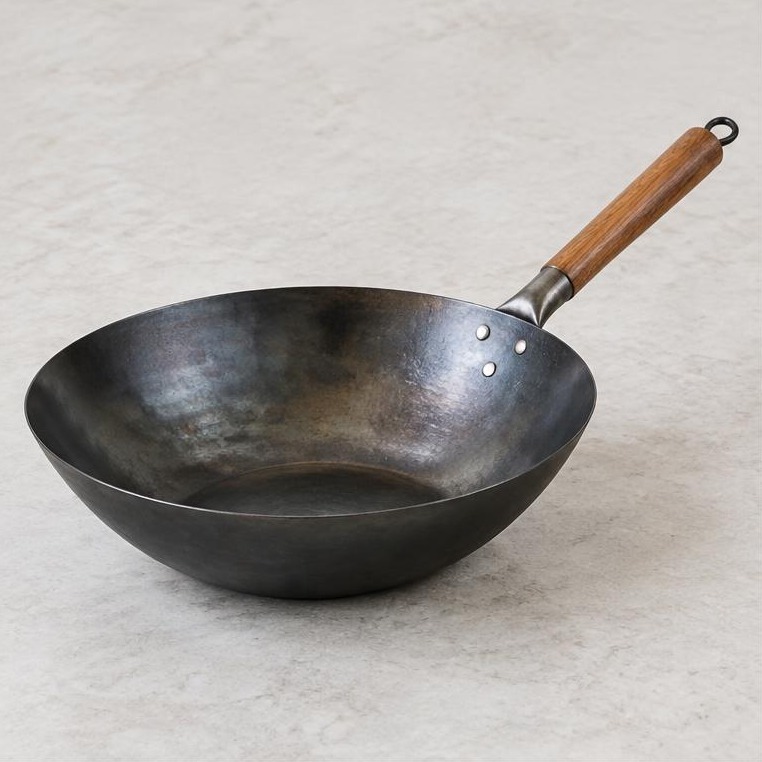
For most home cooks, a manageable 12–14-inch flat-bottom carbon-steel wok is a useful starting point. Choose a secure handle, a stable base and a lid that fits. Induction requires a magnetic, induction-compatible base; check the manufacturer’s instructions.
Flat-bottom carbon steel
A versatile home-stove choice
Light enough to handle, fast to heat and quick to respond when you lower the burner. Bare carbon steel needs seasoning and thorough drying. A stable flat base suits electric and induction cooktops when the pan is compatible.
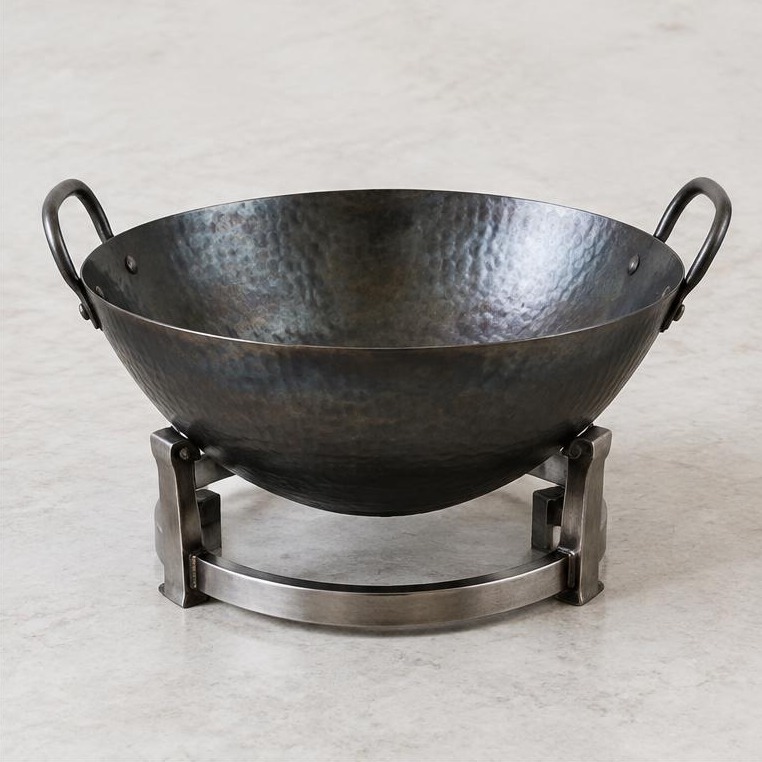
Round-bottom carbon steel
For a compatible wok burner
The rounded bowl makes folding and stirring easy, but it must sit securely on an approved ring or dedicated burner. Do not balance it on a flat electric or induction surface. Check your stove maker before using a ring.
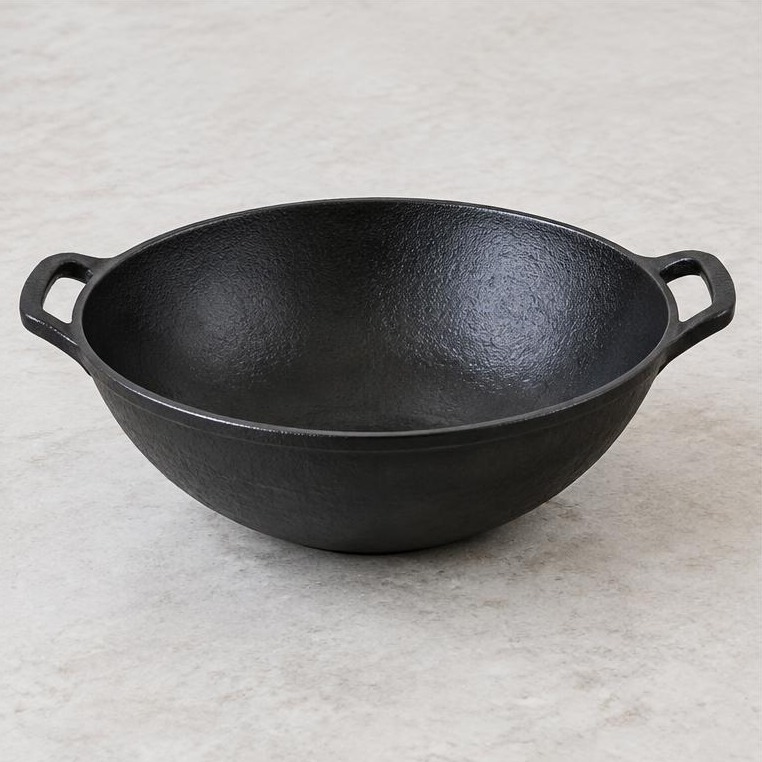
Cast iron
Heat retention, not quick tossing
Heavy and steady once hot; slower to warm up and cool down. Preheat gradually, stir with a spatula instead of lifting a heavy pan, and protect glass cooktops from sliding and impacts. Keep seasoned and dry.
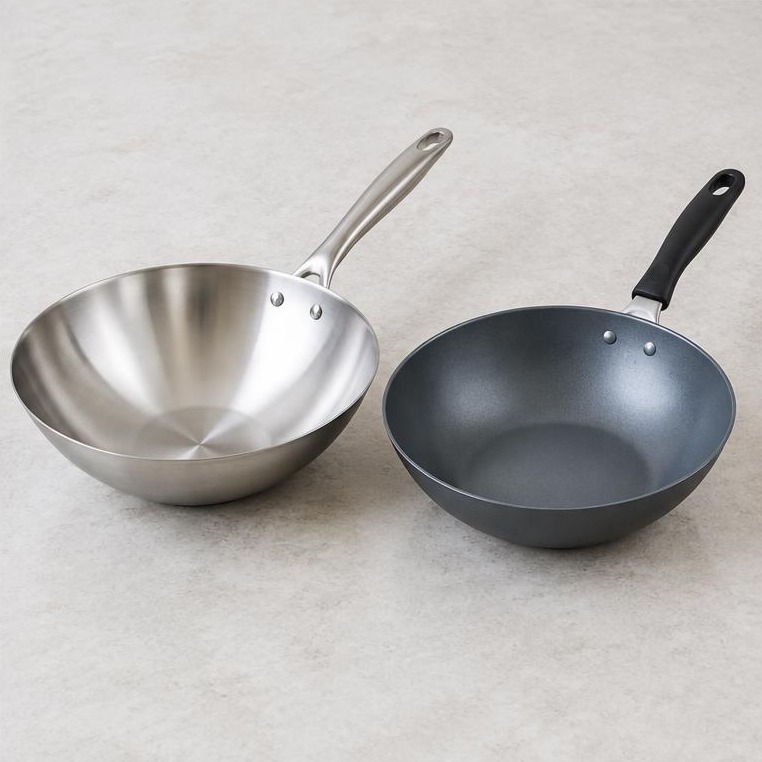
Stainless steel & nonstick
Different surfaces, different heat limits
Stainless steel needs no seasoning and tolerates acidic sauces, but food can stick before it browns. Nonstick is for gentler cooking: follow its maker’s heat limit, never preheat it empty, and use coating-safe tools. It is not a substitute for very-high-heat carbon steel.
Part 02
Set yourself up before the heat goes on
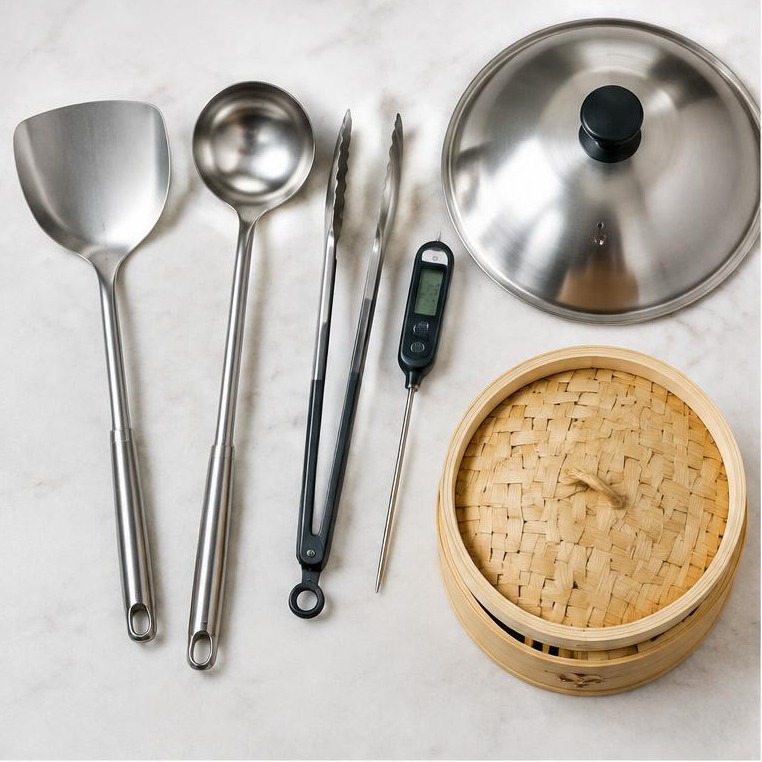
The useful tools
A curved spatula for lifting and folding; a ladle for sauces.
Tongs for delicate pieces and a spider strainer for blanching.
A fitted lid, steamer basket, heatproof mitts and an instant-read food thermometer.
Separate boards, prep bowls and a clean plate for cooked protein. Use wood or silicone with nonstick surfaces.
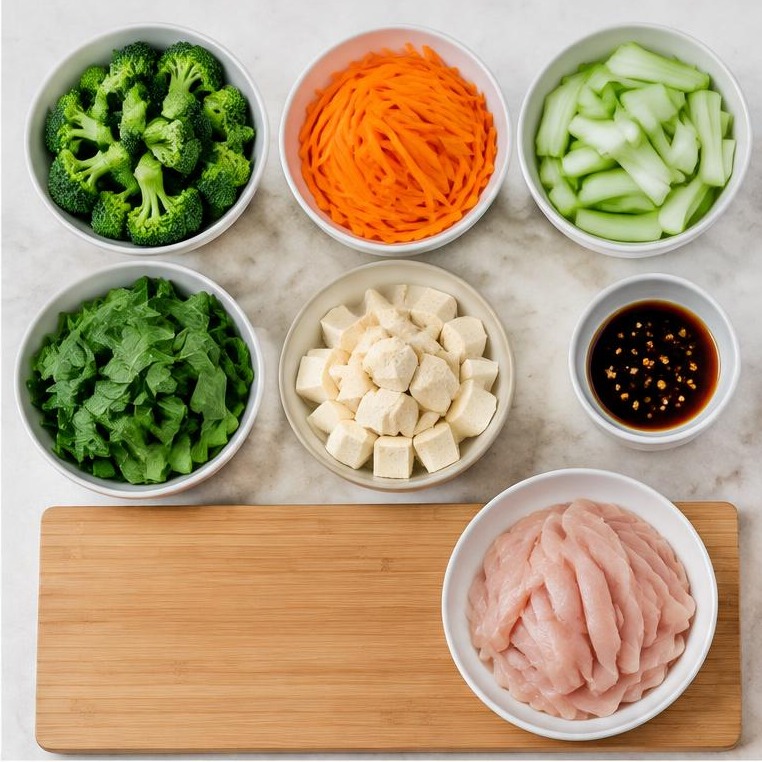
Cut, dry & separate
Read the recipe, mix the sauce and cook any grain first.
Cut food into even pieces; thin strips cook more evenly than large chunks.
Dry vegetables and protein. Separate leafy greens from thick stems.
Keep raw meat and seafood away from ready-to-eat food. Wash hands and boards; never wash raw chicken.
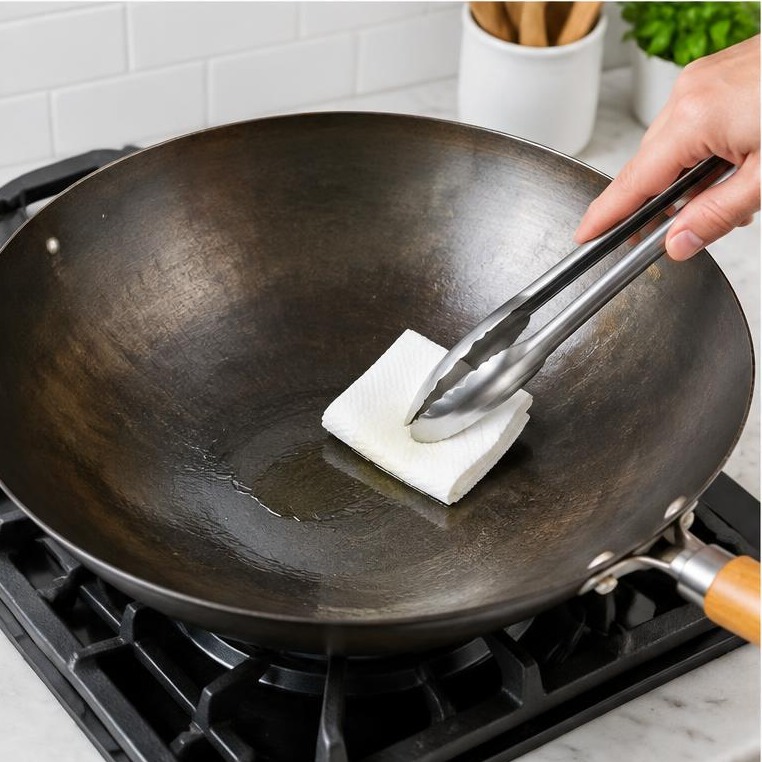
Seasoning, not a pool of oil
For bare carbon steel or cast iron, remove the factory coating and season using the maker’s instructions. Apply a very thin oil film; thick coats become sticky. Heat safely with ventilation and let the pan cool. Do not season stainless steel or coated nonstick as though they were bare iron.
A darkening patina is normal. Seasoning builds over repeated cooking; do not chase restaurant flames or heat an empty pan unattended.
A lighter alternative to oil-velveting
For tender chicken, thinly slice across the grain and coat about 10 oz with 1 tsp cornstarch and 1 tbsp water. Refrigerate while prepping, then stir-fry in a measured amount of oil until 165°F. This light starch coating is not a reason to undercook poultry; discard raw marinade or bring it to a boil before using it as sauce.
Part 03
Match the food to the method
Cook order matters as much as heat.
Food & preparation
When to add
Good method
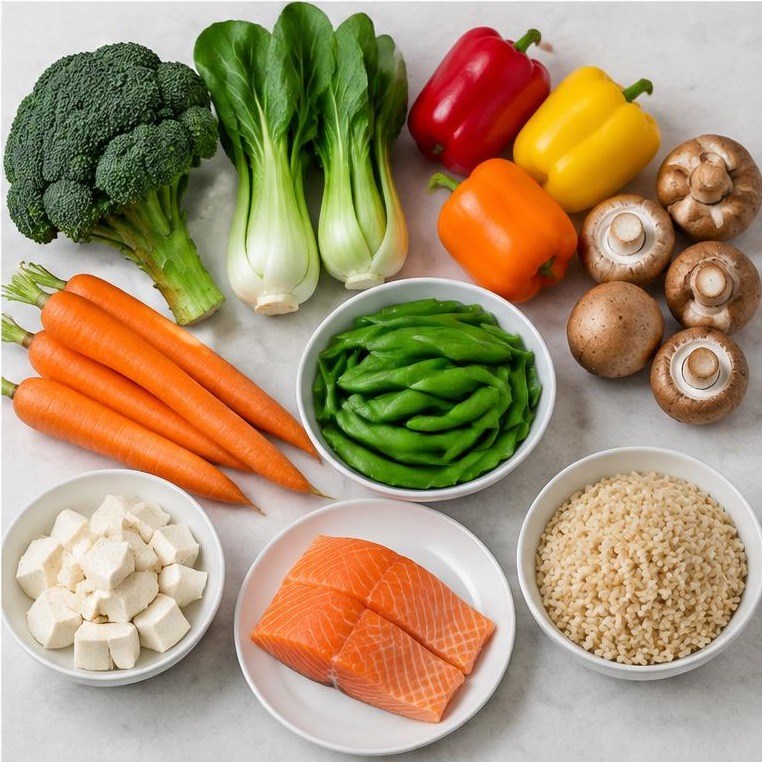
Carrots, broccoli & green beans
Thin carrots; small, even florets; trimmed beans
Firm vegetables first
Steam-fry or blanch, then stir-fry
Peppers, snap peas & zucchini
Similar-sized strips or slices; dry well
After firm vegetables
Brief stir-fry; keep some bite
Bok choy, spinach & cabbage
Separate thick stems from soft leaves
Stems early, leaves near the end
Stir-fry or covered steam
Mushrooms & eggplant
Even slices or cubes; do not crowd
Give them their own batch
Sear mushrooms; steam-fry eggplant to limit oil
Chicken & lean turkey
Thin chicken strips; crumble ground turkey
Cook separately, then combine
Stir-fry; both need 165°F internally
Salmon, cod, trout & shellfish
Dry, even pieces; choose unbrined seafood
Cook gently in a separate batch
Sear, steam or braise; fish needs 145°F
Tofu, tempeh & beans
Drain tofu; use plain tempeh and rinsed no-salt-added beans
Sear tofu first; add cooked beans late
Stir-fry, steam or braise
Rice, quinoa & noodles
Cook ahead safely; drain or chill promptly
After protein and vegetables
Fold through in small batches; reheat leftovers to 165°F
Favor vegetables, plain tofu, lean poultry, fish and no-salt-added beans. Measure oil and sauces; use ginger, garlic, citrus, chile and herbs for flavor. Whole grains still count toward carbohydrates—adjust portions to your personal plan.
Part 04
Eight methods, one versatile pan
1
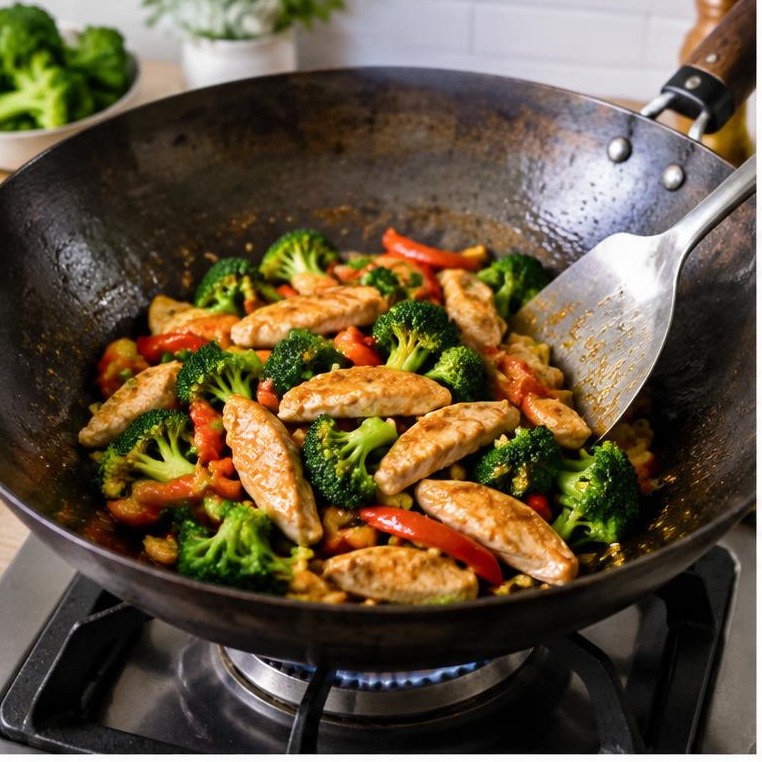
Stir-fry
Medium-high • lid off
Works well with: Thin chicken strips, tofu, broccoli, peppers, snap peas
Have dry, evenly cut ingredients and sauce ready. Preheat an uncoated wok gradually, then swirl in a measured amount of oil.
Cook protein in small batches in a single layer. Let it contact the hot pan before stirring; transfer to a clean plate.
Cook firm vegetables first, then softer vegetables and brief-cooking aromatics. Return protein, add sauce and toss until safely cooked.
A steady sizzle, not a pool of released water. Crowding cools a home wok; cook less at a time.
2
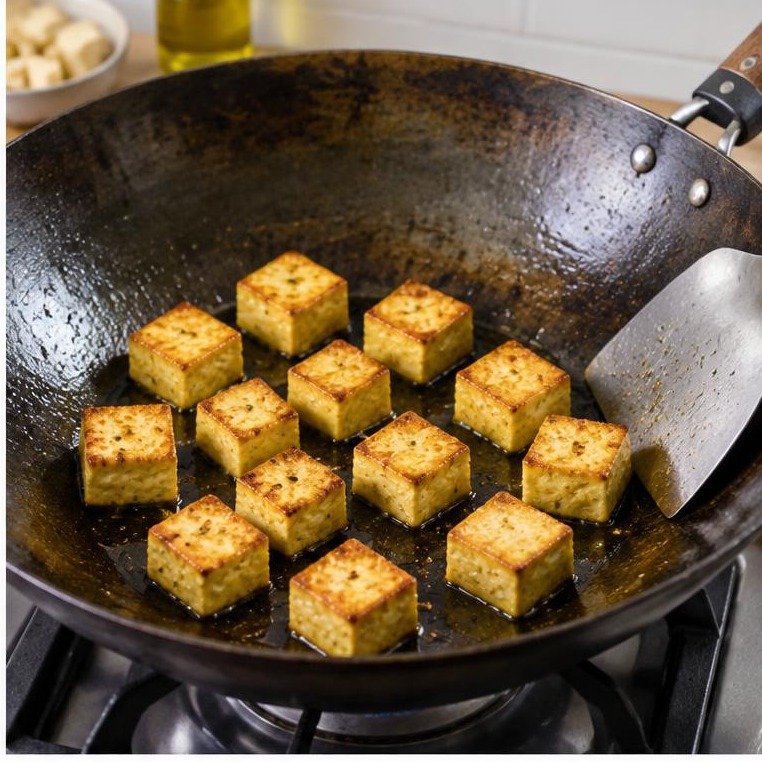
Sear & shallow pan-fry
Medium to medium-high • lid off
Works well with: Dry tofu, mushrooms, salmon or scallops
Pat food dry. Heat an uncoated wok gradually and add enough measured oil to lightly coat the cooking area.
Arrange a small batch with space between pieces. Leave it in contact with the pan until a crust forms and it releases more easily.
Turn gently with a spatula. Reduce heat if the surface browns before the center is ready; verify the food’s internal temperature.
Golden edges and a clean release. Use a thin oil layer rather than deep oil for everyday meals.
3
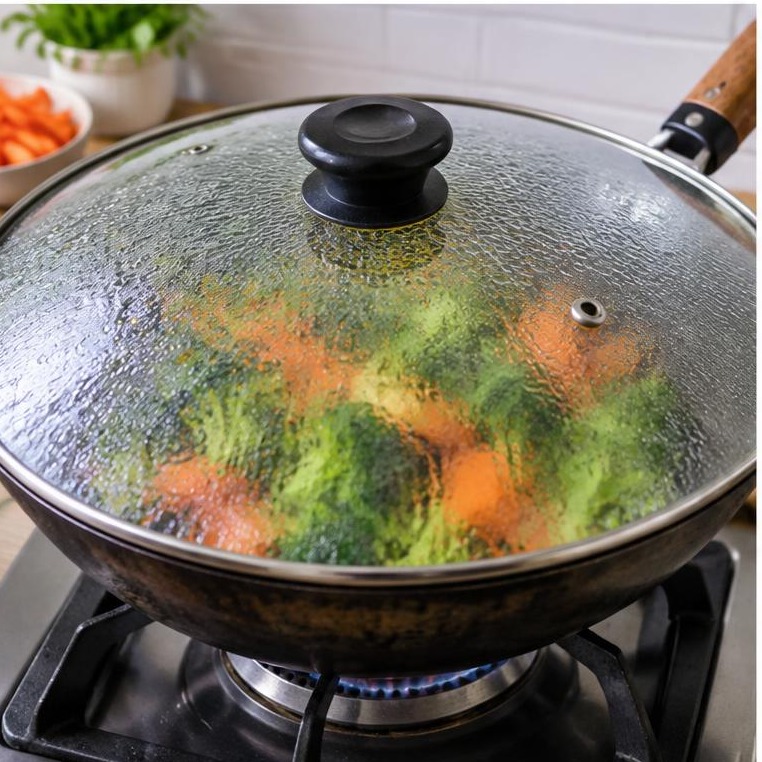
Steam-fry with a lid
Medium-high, then medium • lid on briefly
Works well with: Broccoli, carrots, green beans, bok choy stems
Toss vegetables briefly in a little oil. Reduce heat before adding a small splash of water to avoid violent splattering.
Cover with a well-fitting lid for a short steam. Check often; the timing depends on vegetable size and how tender you like it.
Lift the lid away from your face. Uncover and stir until excess water evaporates, then add leafy greens and seasonings.
Crisp-tender vegetables with little oil. Never pour water into a wok containing a pool of hot oil.
4
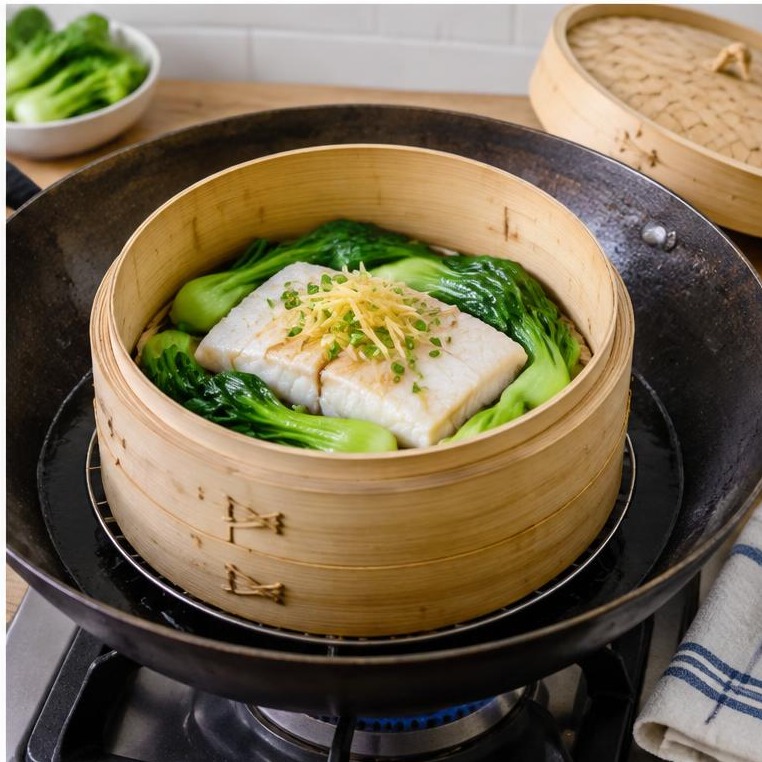
Bamboo-basket steaming
Steady simmer • basket lid on
Works well with: Fish, vegetables, dumplings
Seat a suitable steamer securely over water in the wok. Keep water below the food, following your basket’s instructions; use a liner that allows steam to circulate.
Bring the water to a simmer. Arrange food with gaps, cover the basket and maintain steam without aggressive boiling.
Check water regularly and add hot water safely before it runs dry. Open away from your face and confirm safe food temperatures.
Food cooks above the water, not submerged in it. The basket must not touch a flame.
5
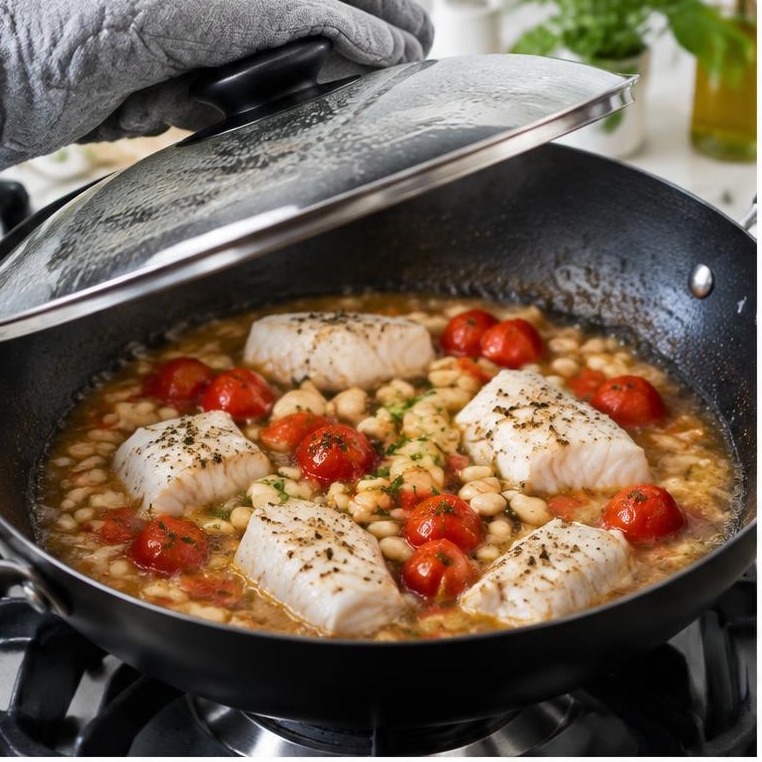
Covered braise & simmer
Low to medium-low • lid on
Works well with: Cod, tofu, beans, mushrooms, firm vegetables
Sear ingredients first if desired, then lower the heat. Add broth or water to partially surround the food, not fill the wok.
Bring to a gentle simmer and cover. Check periodically, adding liquid if needed so the bottom does not dry out.
Handle delicate fish gently. Once food is safely cooked, uncover briefly to reduce the sauce if needed.
Small, gentle bubbles—not a rolling boil. Long acidic braises are better in stainless steel; acid can strip carbon-steel seasoning.
6
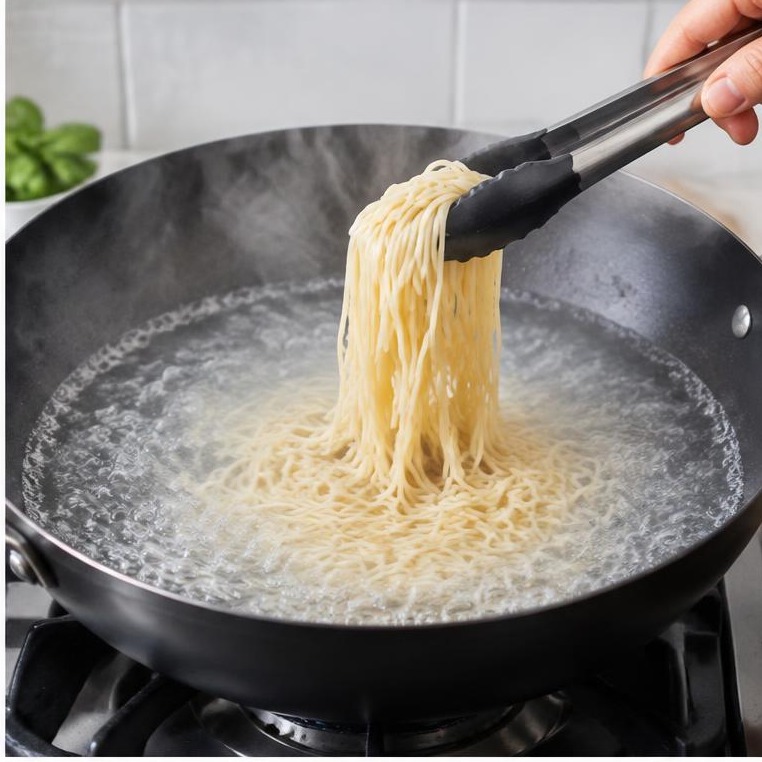
Boil & blanch
High to reach a boil, then adjust • lid off
Works well with: Noodles, broccoli, green beans
Use a stable wok with enough water to cover the food, leaving generous room below the rim. Bring water to a boil.
Add a manageable amount of vegetables or noodles. Cook to the recipe’s timing; taste vegetables for tenderness and follow noodle package directions.
Lift out with a spider strainer or tongs. Drain well before stir-frying so water does not cool the pan or splatter in oil.
Useful for precooking firm vegetables. Avoid prolonged boiling in seasoned carbon steel; dry and oil it afterwards.
7
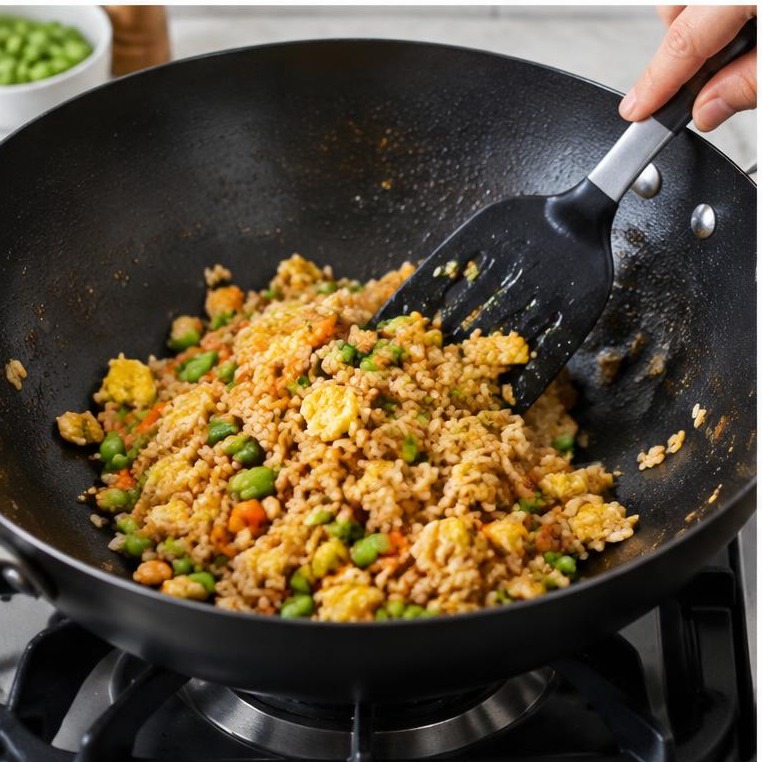
Fried rice & noodle tossing
Medium-high • lid off
Works well with: Safely chilled brown rice, cooked noodles, egg, edamame
Break up cold cooked rice or drain cooked noodles thoroughly. Scramble egg separately until set and cook raw protein separately.
Stir-fry vegetables, then add a small batch of rice or noodles. Fold and press with a spatula; tossing the whole wok is optional.
Return the other cooked ingredients and add measured sauce. Reheated rice and leftovers must reach 165°F throughout.
Loose grains, not a wet mound. Never use rice left on the counter overnight; reheating cannot make badly stored rice reliably safe.
8
Finish with a light sauce
Medium • lid off
Works well with: Any cooked stir-fry, vegetables or tofu
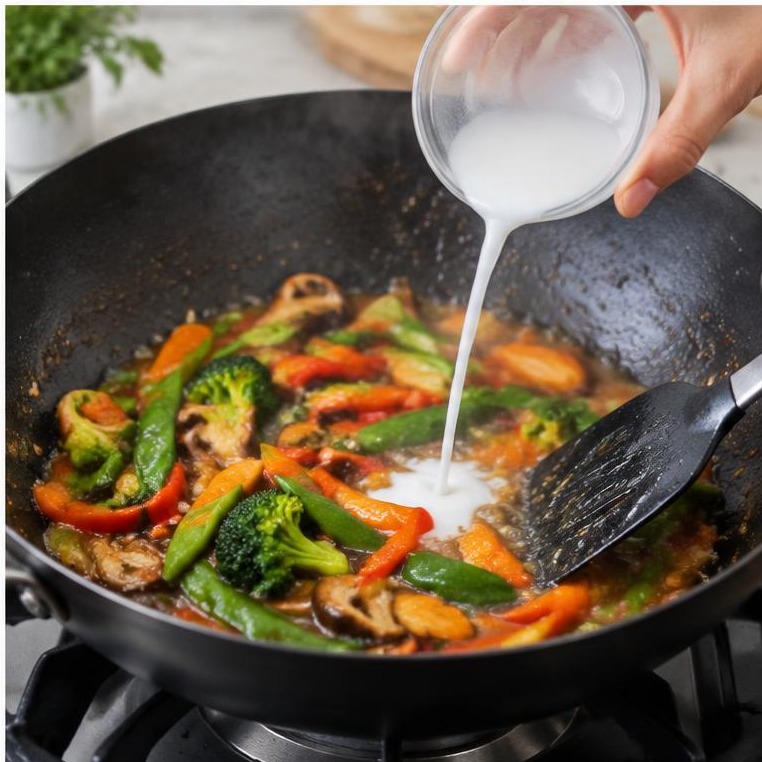
Mix citrus or vinegar, measured reduced-sodium soy sauce and water. For thickening, start with 1 tsp cornstarch stirred into 1 tbsp cool water for a two-serving dish.
Stir the slurry again just before pouring a little into simmering liquid, not directly onto a dry hot wok.
Stir briefly until the starch cooks and the sauce lightly coats the food. Add water if too thick; finish with herbs and turn off the heat.
A light coating, not a sticky sugary glaze. Add toasted sesame oil as a measured finishing flavor, not as the main high-heat oil.
What about deep-frying, dry-frying & smoking?
Traditional woks can also deep-fry and smoke food, but these are not the everyday heart-conscious methods taught here. Dry-frying gradually removes moisture with frequent stirring; do not interpret it as burning food in an empty pan. Steam-fry green beans instead of repeatedly oil-frying them. Deep-frying needs a stable pan, oil thermometer, adequate headroom, dry food and constant supervision; never add water to hot oil. Indoor wok smoking requires appropriate equipment and ventilation—do not improvise with a sealed hot pan.
Part 05
Heat control is not a doneness test
Burner settings & pan cues
There is no single safe “wok temperature” for every pan. A burner dial is not a thermometer; surface heat varies by stove, material, oil and food load. The method labels are starting points for an uncoated wok, not instructions to exceed a nonstick pan’s limits.
Medium-high: stir-fry and quick searing
A lively sizzle, a small batch and no heavy smoke. If food steams in released water, reduce the batch size.
Medium: steam-fry and sauce finishing
Enough heat to generate steam or thicken sauce without burning garlic or starch.
Low to medium-low: braising and simmering
Gentle bubbles. Cover to retain moisture; uncover to reduce.
Steaming and boiling water
Water boils near 212°F / 100°C at sea level; altitude lowers this. Steam still burns, and food needs its own doneness check.
Canola, peanut or another suitable refined oil can work for stir-frying; check allergies and the oil label. Start with the recipe’s measured amount. If oil smokes heavily, turn down the heat or remove the pan safely—never aim for smoke or flames.
Safe internal food temperatures
Measure the food, not the wok. Insert the probe into the thickest part without touching metal.
Chicken, turkey & all ground poultry
165°F / 74°C
Check the thickest pieces; no rest-time substitute.
Fish
145°F / 63°C
Check the center of the thickest piece.
Shrimp & scallops
Pearly or white & opaque
USDA visual guidance; avoid judging by a pink exterior alone.
Ground beef, pork, lamb & veal
160°F / 71°C
Ground poultry still needs 165°F.
Whole cuts of beef, pork, lamb & veal
145°F / 63°C + 3-minute rest
Prefer lean cuts and check the thickest section.
Egg dishes
160°F / 71°C
Scrambled eggs should be firm, not runny.
Leftovers, including reheated rice
165°F / 74°C
Check several spots; stir for even heating.
Rice, leftovers & fire safety
Refrigerate perishables in shallow containers within 2 hours—or 1 hour above 90°F / 32°C. Keep the refrigerator at or below 40°F / 4°C and use refrigerated leftovers within 3–4 days. Never leave cooked rice out overnight. Keep handles secure, towels away from flames and children away from hot pans. Never use water on an oil fire; turn off heat if safe, cover with a metal lid if safe, and never carry the burning pan. If the fire is not immediately controlled, leave and call emergency services.
Part 06
Put it together, then care for your wok
Your first two-serving stir-fry
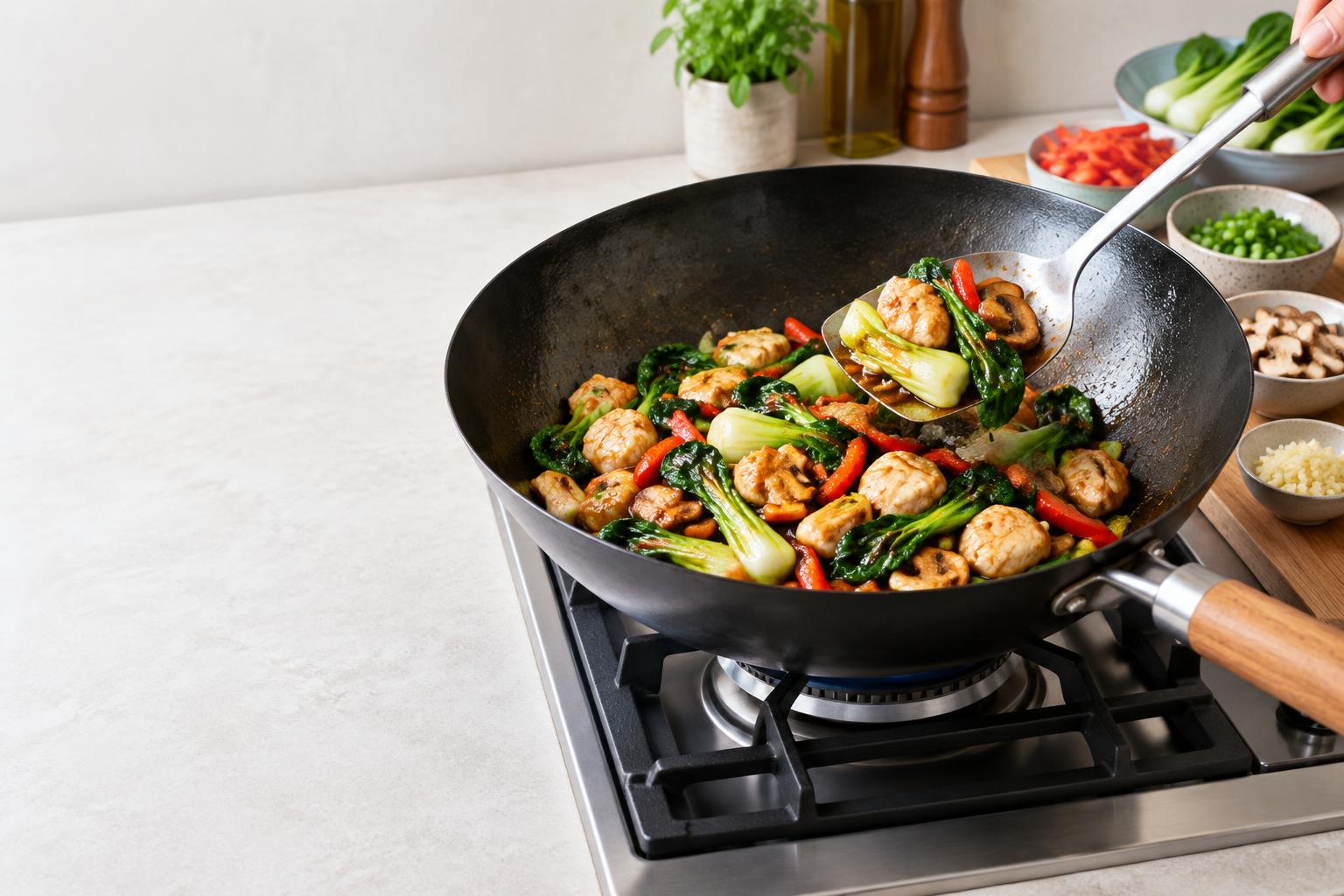
Start with ginger chicken, bok choy and shiitake. Prepare the rice and sauce before switching on the burner.
Cook chicken in small batches, then mushrooms and bok choy stems. Add garlic, ginger and leaves near the end.
Return chicken, add sauce and confirm 165°F in the thickest pieces. Serve promptly over the measured rice portion.
Let the pan cool enough to handle. Wash according to its maker; mild dish soap is generally fine for well-seasoned bare iron. Do not thermal-shock a hot pan with cold water.
Dry carbon steel and cast iron immediately, gently warm to remove moisture if the maker allows, then wipe on a very thin oil film. No soaking or dishwasher.
Remove rust and restore seasoning according to the manufacturer. For sticky seasoning, use less oil next time.
For nonstick, avoid abrasive cleaners and metal tools; stop using a coating that is peeling or badly damaged.
Quick fixes
Watery vegetables? Dry them and cook smaller batches. Burnt garlic? Add it later and lower the heat. Stuck tofu? Dry it, use a suitable surface and let a crust form before turning. Thick sauce? Add a small splash of water.