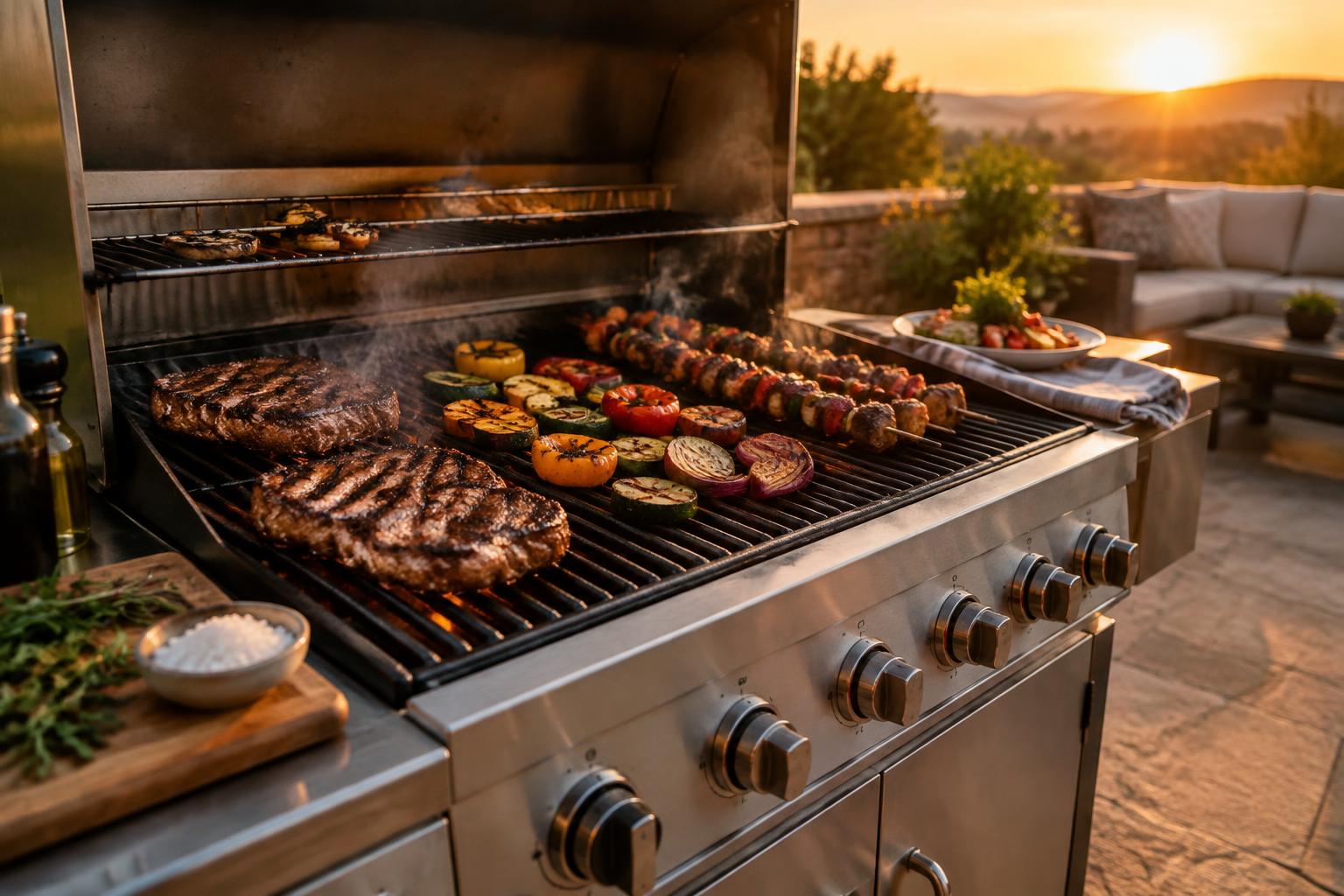
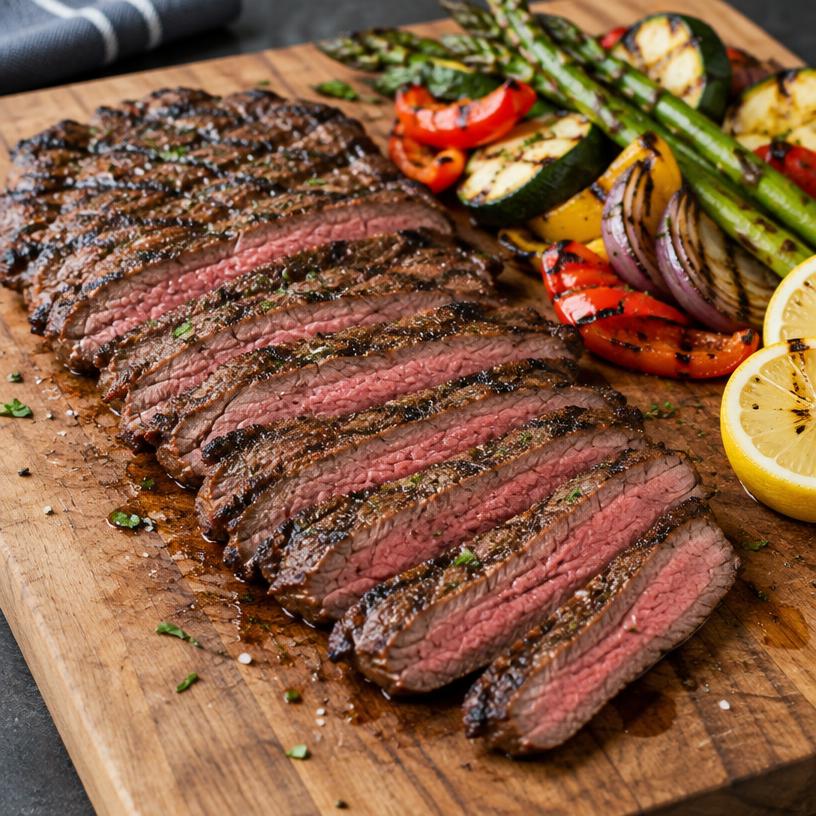
Preheat hot, set up a hot side and a cool side, and cook by thermometer, not by guess. Master those three habits and everything from vegetables to steak to pizza comes out right.
Part 01
Know your grill and your tools
A gas grill gives you something charcoal can't: heat you can turn up and down instantly. Learning how your own grill behaves is the first step to cooking well on it.
The grill and the tools
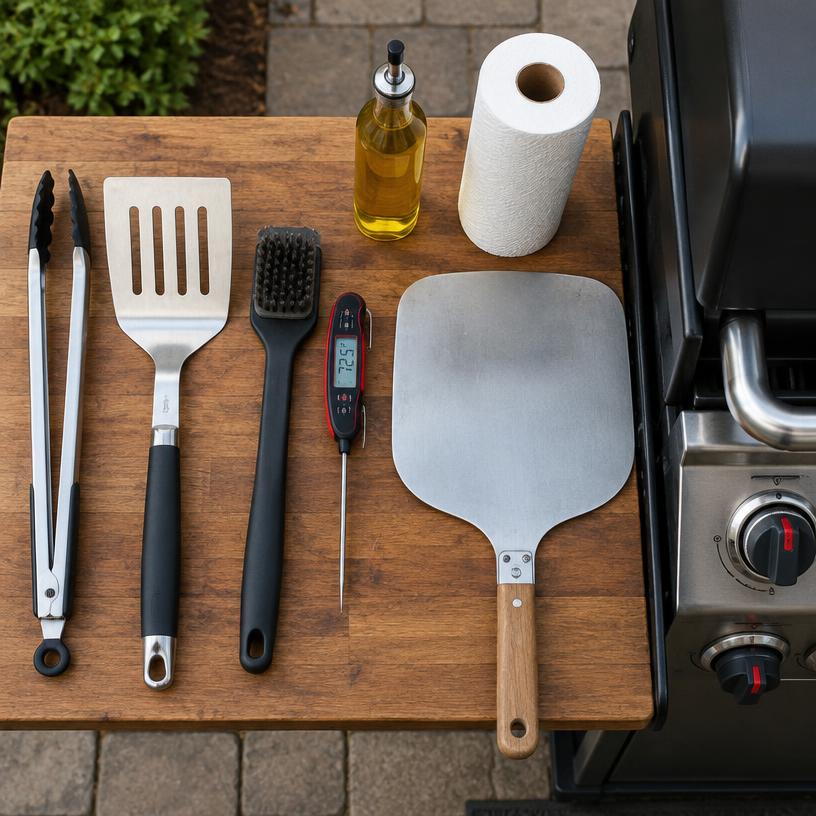
Long tongs, a wide spatula, a brush — and a thermometer
You need long-handled tongs (not a fork, which lets juices escape), a wide spatula for fish and burgers, a stiff grill brush or scraper, oil and folded paper towels for the grates, and an instant-read thermometer. The thermometer is the single tool that turns guessing into consistent results.
Knowing your burners
Every grill has hot spots — find yours once
Lay slices of white bread across the whole grate, heat on medium for a few minutes and look: the darker slices mark the hot spots, the pale ones the cool spots. Remember that map. A built-in lid thermometer reads the air near the lid, often 25–50°F off from the grate, so trust a grate-level reading or your hand.
Grilling the heart-healthy way
Grilling lets fat drip away and needs very little oil. Choose lean cuts, skinless poultry, fish and lots of vegetables; flavor with herbs, citrus, garlic, spice rubs and smoke instead of salt and sugary sauces.
Part 02
The basics: every cook, every time
These eight steps are the foundation. Follow them in order every time and most grilling problems never happen.
1
Safety check before you light
Grill outdoors only, at least 10 feet from the house, under nothing that can burn. Check hoses for cracks with soapy water — bubbles mean a leak. Empty the grease tray regularly; a full tray causes most flare-up fires.
2
Light it with the lid open
Open the lid, open the tank valve slowly, then turn one burner to high and press the igniter. If it doesn't light within a few seconds, turn the gas off, wait 5 minutes with the lid open, and try again. Never light with the lid closed — gas builds up.
3
Preheat 10–15 minutes, lid closed
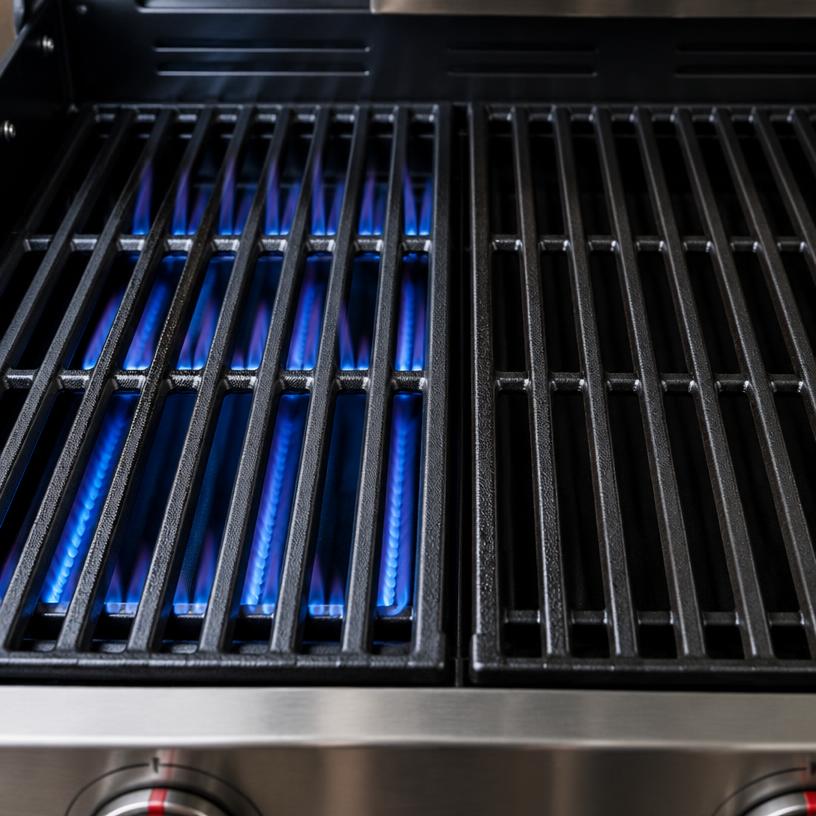
Turn all burners to high and close the lid until the grill reaches 450–550°F. A hot grate is what stops sticking and makes marks. Skipping the preheat is the number one beginner mistake.
4
Brush clean, then oil the grates
Scrape the hot grates clean, then wipe them with a folded paper towel dipped in oil, held in tongs. Check for loose wire bristles after brushing — or use a bristle-free scraper.
5
Set your heat zones
Turn burners down to create zones: high on one side for searing, medium in the middle, and one burner off for gentle indirect cooking. This is what lets you move food instead of burning it.
6
Oil the food, not just the grill
Pat food dry, brush lightly with oil, then season. Dry surfaces brown; wet surfaces steam and stick. Save sugary sauces for the last few minutes — sugar burns fast.
7
Hands off until it releases
Lay food down and leave it alone. When the sear is done, it lifts away cleanly; if it sticks, give it another minute. Flip once for most foods; thin items can be flipped more often for even cooking.
8
Check temperature, then rest
Push the thermometer into the thickest part, away from bone. Cook until it reaches the safe minimum for that food — 165°F for poultry, 160°F for ground meats, 145°F for whole-cut steaks, chops and roasts, 145°F for fish — then remove it and rest on a clean plate (never the one that held raw meat). Whole-cut steaks, chops and roasts need at least a 3-minute rest after reaching 145°F; other meats rest 5–10 minutes for juiciness.
Part 03
Heat zones and temperatures
Grill heat and how to cook each type of food — with safe finished temperatures.
Food
Heat
Done
Steak, chops, burgers (searing)
Direct, then move to medium if thick
High • 450–550°F
Steaks and chops safe at 145°F + 3 min rest; ground beef 160°F.
Chicken breasts, thighs
Direct, lid closed; finish indirect
Medium • 375–450°F
Always 165°F. Pound breasts even so the thin end doesn't dry out.
Fish fillets, shrimp
Direct on well-oiled grates, plank or foil
Medium-high • 400–450°F
145°F, or flesh opaque and flaking. Shrimp turn pink in 2–3 minutes a side.
Vegetables
Direct; skewer or basket small pieces
Medium to medium-high
Cut wide planks so they don't fall through. Dense vegetables can be par-boiled.
Pizza
On a preheated stone, lid closed
Very high • 500–600°F
Preheat the stone 20–30 minutes with the grill.
Whole pork tenderloin, roasts, whole chicken
Indirect, burners off underneath
Medium • 325–375°F
Pork 145°F + rest; whole poultry 165°F in the thigh.
Fruit (peaches, pineapple)
Direct, cut side down, 2–4 minutes
Medium
Natural sugar caramelizes — no added sugar needed.
Part 04
From vegetables to steak to pizza
Ordered from easiest to most advanced. Start at the top and work your way down.
1
Beginner
Vegetables with a perfect char
Medium-high • direct heat
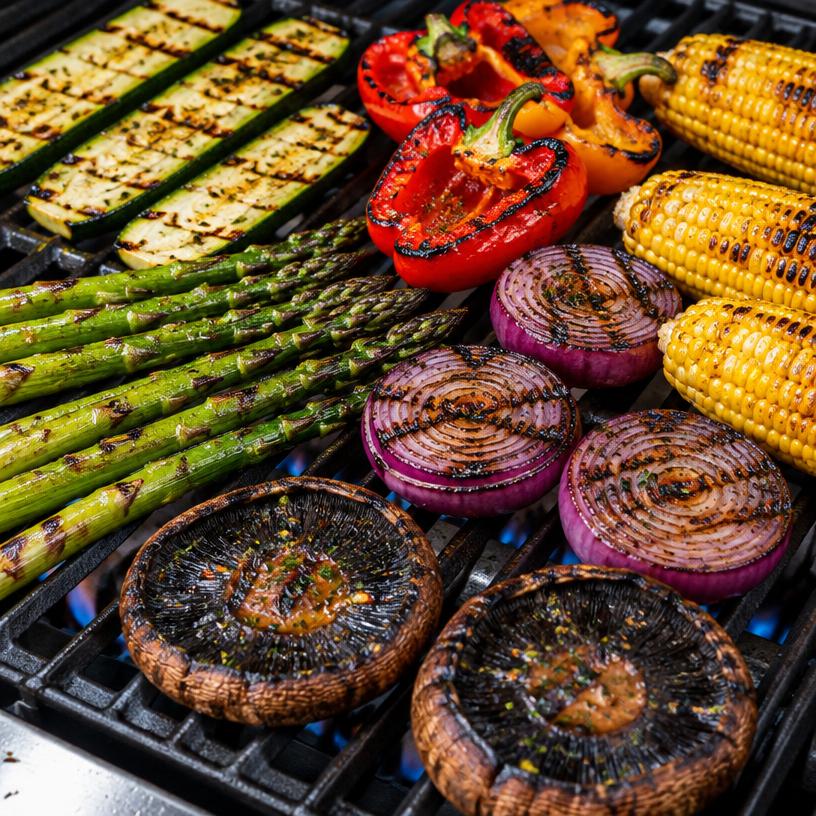
Works well with: Zucchini, peppers, corn, asparagus, onion, portobello, eggplant
Cut vegetables lengthwise into ½-inch planks or wide pieces; halve peppers, slice onions into thick rounds and pin with a toothpick.
Toss with a teaspoon of olive oil per serving, pepper, garlic powder and herbs. Skip the salt until the end.
Grill directly 3–5 minutes per side until marked and tender-crisp. Corn: 10–12 minutes, turning every few minutes.
Finish with lemon juice, fresh herbs or a splash of balsamic for big flavor without sodium.
Deep marks, edges just softening, still a little bite in the middle. Use a grill basket for cherry tomatoes, mushrooms and small pieces.
2
Beginner to intermediate
Chicken and fish without drying out
Medium to medium-high • direct, then indirect
Works well with: Chicken breasts and thighs, salmon, cod, shrimp skewers
Pound chicken breasts to an even ¾ inch. Marinate 30 minutes to 4 hours in citrus, garlic, herbs and a little oil (fish only 15–30 minutes — acid starts to cook it).
Sear chicken over medium direct heat 5–6 minutes a side with the lid closed; move to the cool zone if the outside browns before the center is done.
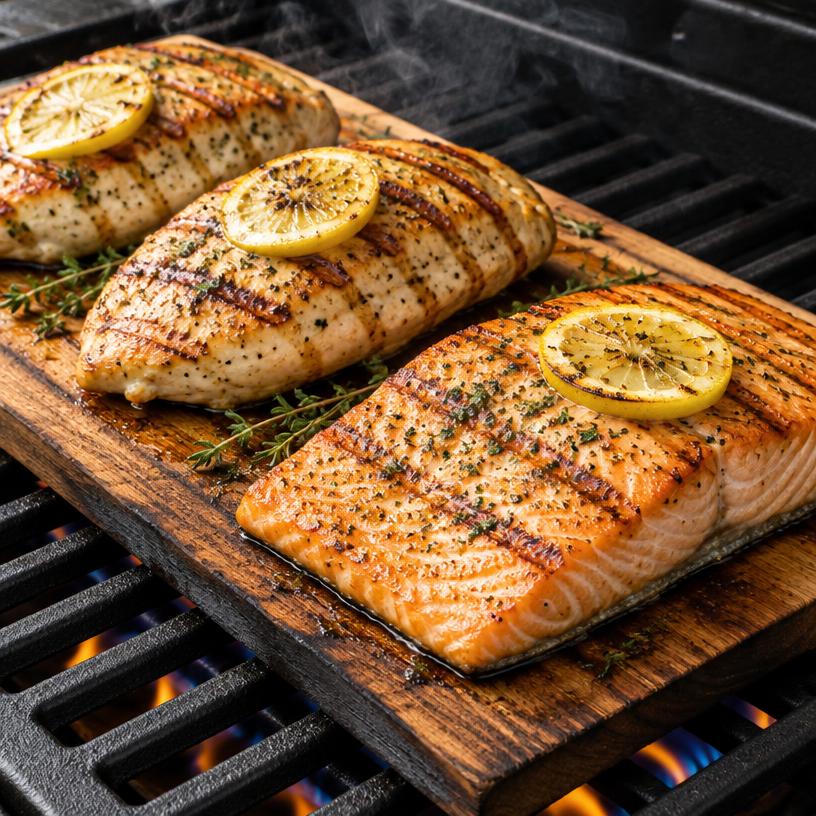
For fish, oil the grates heavily, lay fillets skin-side down and don't move them for 4–6 minutes. Or soak a cedar plank 1 hour and cook fish on it, lid closed, 12–15 minutes.
Cook chicken until a food thermometer reads 165°F in the thickest part, avoiding bone. Then remove it from the grill and rest before serving. Fish is done at 145°F.
The thermometer reads 165°F in the thickest part of the chicken, avoiding bone. Fish turns from glossy to opaque and separates in large flakes.
3
Intermediate to advanced
Steakhouse steak, reverse-sear
Indirect low, then high direct
Works well with: Sirloin, flank, filet, lean strip — about 1–1½ inches thick
Pat dry and season with pepper, garlic and a light pinch of salt 40 minutes ahead (or right before). Choose lean cuts and trim the fat.
Thick steaks: cook on the cool side, lid closed at about 275°F, until 10–15°F below your target. Thin steaks skip this step.
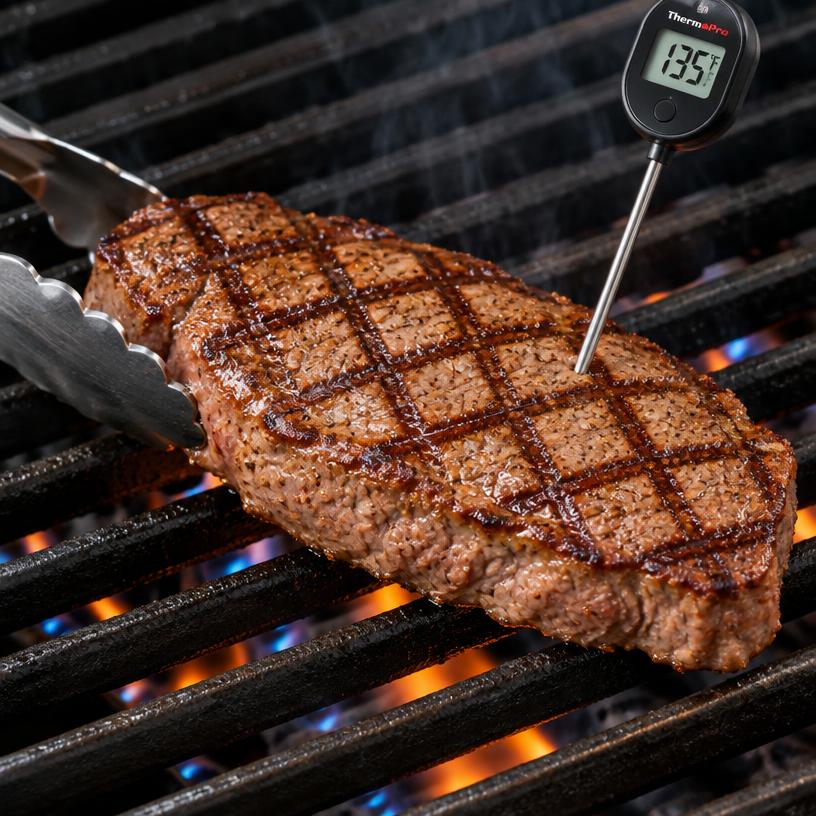
Crank the hot side to high, sear 1–2 minutes per side. For crosshatch marks, rotate 45° halfway through each side.
Rest 5 minutes, then slice thinly against the grain — especially flank and skirt.
An even pink edge to edge with a dark crust means the reverse sear worked. For safety, the steak should reach 145°F / 63°C and then rest at least 3 minutes before serving — lower finishing temperatures are a doneness preference, not the safe minimum.
4
Advanced
Pizza on the grill
Very high • 500°F+ with a stone, lid closed
Works well with: Whole-wheat dough, tomato sauce, vegetables, fresh mozzarella
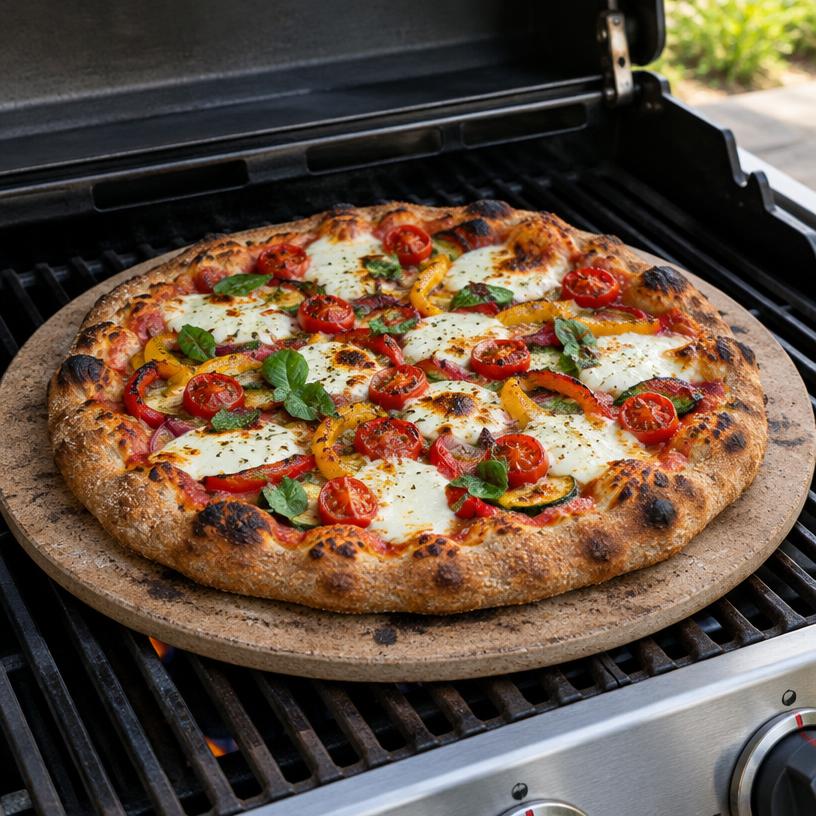
Place a pizza stone on the grates and preheat the grill on high for 20–30 minutes with the lid closed.
Stretch dough thin on a floured or cornmeal-dusted peel. Top lightly — sauce, a small amount of fresh mozzarella, and plenty of vegetables (pre-grill watery ones).
Slide onto the stone, close the lid and bake 5–8 minutes, rotating once halfway for even browning.
No stone? Grill the plain dough directly 1–2 minutes until marked, flip, top the cooked side, close the lid on medium for 3–4 minutes.
Crust puffed and spotted brown underneath, cheese bubbling. If the bottom burns before the top cooks, turn the burner under the stone down and keep the outer ones high.
5
Advanced
Smoke and roast with indirect heat
Medium-low • 300–350°F, burners off beneath the food
Works well with: Pork tenderloin, whole chicken, turkey breast, large fish
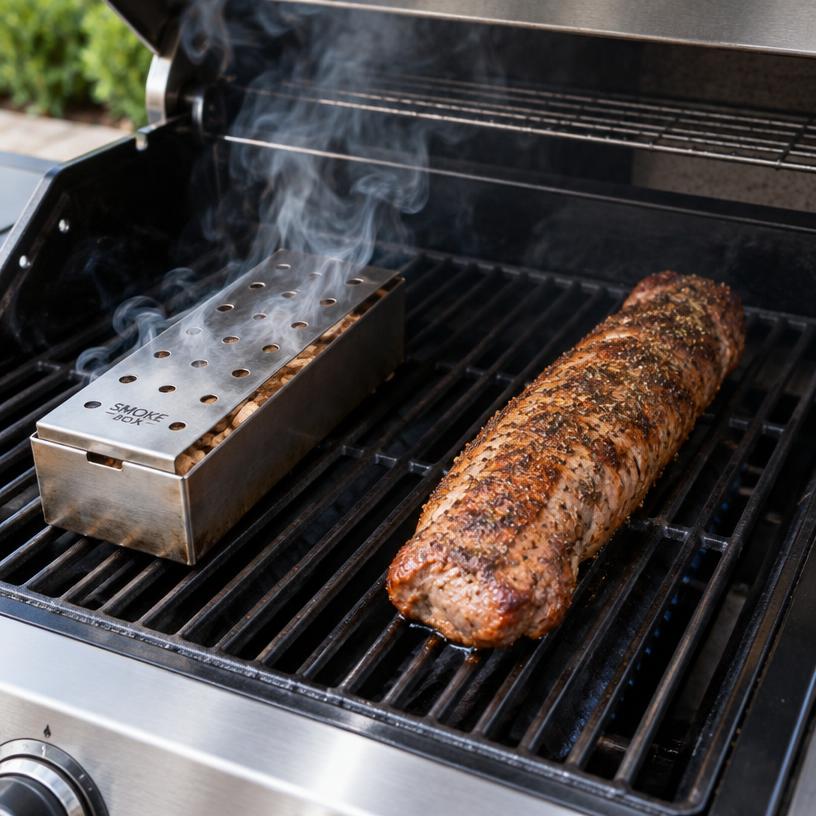
Fill a smoker box (or a foil pouch with holes) with soaked or dry wood chips — hickory, apple or cherry — and set it over a lit burner.
Turn off the burners under the food and leave the others on medium. Close the lid and aim for 300–350°F.
Place the meat on the unlit side and cook with the lid closed. Open as little as possible — every peek adds minutes.
Sear over direct heat for the last few minutes if you want a crust, then rest before slicing.
Pork tenderloin 145°F (about 20–25 minutes), whole chicken 165°F in the thigh. Smoke flavors without salt — a big win for a heart-healthy cook.
Part 05
Pro and proven techniques
The hand test
Hold your palm 5 inches above the grate: 2 seconds is high, 5–6 seconds is medium, 8–10 is low. A quick backup when there's no thermometer.
Control flare-ups by moving, not spraying
Move food to the cool zone and close the lid until the flames die down. Water sprays spread grease and ash. Trim fat first and you'll have fewer flare-ups.
Marinades reduce charring
Herb, citrus and garlic marinades help limit the compounds that form when meat chars. Trim burnt bits and avoid blackening meat.
Lid closed = oven
Close the lid for anything thicker than ¾ inch. The grill becomes an oven, cooking the inside while the outside sears.
Press nothing
Never press burgers or chicken with the spatula — you squeeze out the juice and cause flare-ups. Make a thumbprint dent in burgers so they stay flat.
Keep a clean plate
Use separate plates and tongs for raw and cooked food. Boil leftover marinade for at least 1 minute before using it as a sauce.
Rest, then slice against the grain
Resting 5–10 minutes lets juices settle back into the meat instead of running onto the board. Then look for the lines running through the meat and slice across them in thin strips — even a lean, firm cut like flank steak turns tender.
Part 06
Safety, your first cook, and fixes
Grill and food safety
Use a food thermometer: beef, pork, lamb steaks and chops 145°F with a 3-minute rest; ground beef, pork and lamb 160°F; ground turkey and all poultry 165°F; fish 145°F.
Thaw meat in the refrigerator, never on the counter. Marinate in the fridge, not outside.
Never leave a lit grill unattended, and keep children and pets 3 feet away.
If you smell gas while cooking, turn off the tank and burners right away. If the smell continues, move away and call the fire department.
Refrigerate leftovers within 2 hours — 1 hour if it's above 90°F outside.
After cooking, turn off the burners and then the tank valve. Let the grill cool before covering it.
Your first practice cook
Preheat on high 15 minutes, scrape and oil the grates.
Turn one side to medium-high and the other side off.
Grill zucchini and pepper planks directly, 4 minutes a side.
Grill an even ¾-inch chicken breast directly 5 minutes a side, lid closed.
Move it to the cool side until the thermometer reads 165°F, then rest 5 minutes.
The grill wasn't hot enough, or the grates were dirty or dry. Preheat fully, scrape, oil, and wait until the food releases before flipping.
Burnt outside, raw inside
Too much direct heat for the thickness. Sear, then move to the cool zone with the lid closed until it reaches temperature.
Dry chicken
Uneven thickness or overcooking. Pound to an even thickness and cook until a food thermometer reads 165°F in the thickest part, avoiding bone — then remove and rest before serving.
No grill marks
Grates not preheated or food moved too soon. Preheat 15 minutes and leave food in place for at least 2–3 minutes.
Uneven cooking across the grill
Hot spots. Use the bread test to map them and rotate food between zones.
Sauce burnt black
Sugary sauces went on too early. Brush them on only in the last 2–5 minutes.